If you live in Katy or the greater Houston area, your HVAC system works harder than most.
Long summers.
High humidity.
Heavy daily usage.
And eventually, every homeowner reaches the same moment:
“Should I repair this… or replace the system before it fails?”
The problem is that most people wait until the decision is forced on them — usually during the hottest week of the year.
When your AC dies in the middle of a Texas summer, the situation changes immediately:
You need cooling now, not next week.
That urgency removes your ability to compare quotes, evaluate options, or plan the investment calmly.
This guide will help you recognize when replacing your HVAC system in Katy makes sense — before it becomes an emergency decision.
Because the best time to replace a system is rarely the day it stops working.
Step 1: Understand the Typical Lifespan of HVAC Systems in Houston
In moderate climates, HVAC systems can last 15–20 years.
But Houston’s climate is not moderate.
Between humidity, long cooling seasons, and heavy compressor usage, most systems in the Katy area realistically last:
10–15 years
Several factors influence lifespan:
- Maintenance history
- Installation quality
- System sizing
- Airflow and ductwork condition
- Frequency of repairs
A well-maintained system might exceed 15 years.
But once a unit passes the 10–12 year mark, failures become less predictable.
That’s when planning ahead becomes valuable.
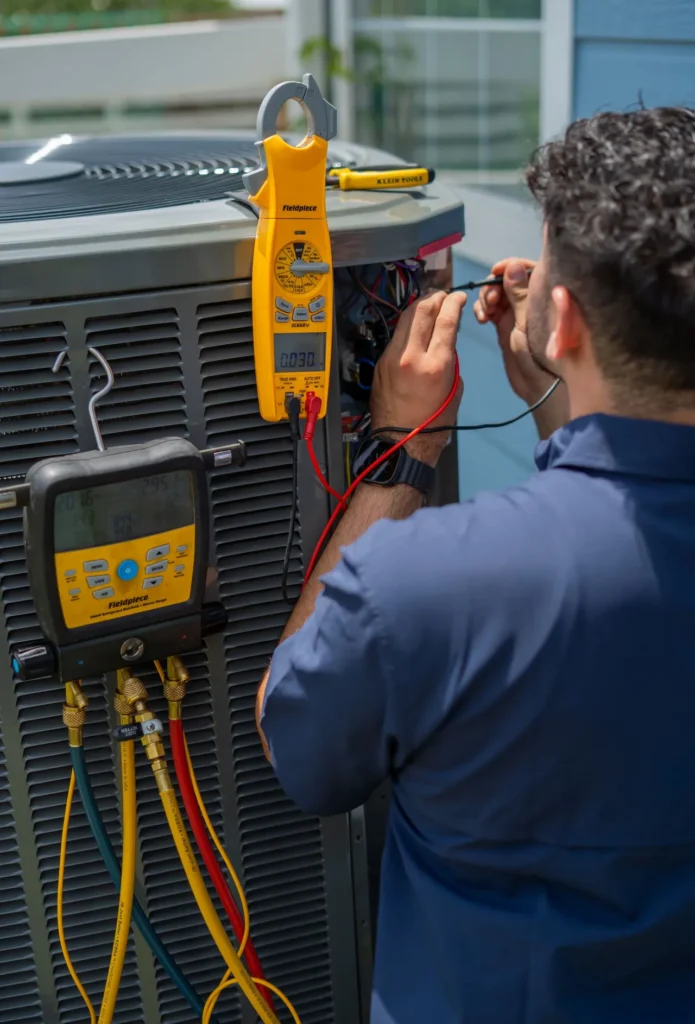
Step 2: Watch for These End-of-Life Warning Signs
HVAC systems rarely fail without warning.
Most aging systems show signs months — sometimes years — before a major breakdown.
Common signals include:
Frequent Repairs
If you’ve had multiple service calls in the past 1–2 years, your system may be approaching the point where repairs become inefficient.
Small failures tend to cluster as components age together.
Rising Energy Bills
Older systems lose efficiency gradually.
If your cooling costs keep increasing despite similar usage, the system may be struggling to maintain performance.
Difficulty Controlling Humidity
In Houston’s climate, humidity control is just as important as temperature.
Older systems often:
- Short-cycle
- Struggle with airflow
- Fail to remove enough moisture
The result is a home that feels cool but still uncomfortable.
New or Unusual Noises
Grinding, buzzing, or repeated clicking can indicate:
- Compressor stress
- Fan motor wear
- Electrical issues
These aren’t always emergencies — but they’re signs the system is aging.
Step 3: Know the Repair vs Replace Threshold
A helpful rule many technicians use is the “$5,000 Rule.”
Multiply:
Repair cost × system age
If the number exceeds $5,000, replacement often makes more financial sense.
Example:
- System age: 12 years
- Repair estimate: $600
12 × 600 = $7,200
In that situation, investing in a new system may provide better long-term value.
But this rule is only a guideline.
Other factors matter too.
Step 4: Consider Refrigerant Changes
Many older HVAC systems use R-22 refrigerant, which has been phased out in the U.S.
That means:
- Supplies are limited
- Prices are rising
- Repairs involving refrigerant leaks can be expensive
If your system still uses R-22 and develops a leak, replacing the system may become the more practical option.
Modern systems use R-410A or newer refrigerants, which are more accessible and efficient.
Step 5: Think About Timing — Not Just Cost
One of the biggest mistakes homeowners make is focusing only on today’s repair cost.
But timing affects everything.
Replacing your HVAC system before failure gives you:
- Time to compare multiple quotes
- Flexibility to choose the right system
- Ability to schedule installation during slower seasons
- Less risk of emergency pricing
When a system fails during peak summer demand, installation schedules fill quickly.
You may be forced to choose from limited options.
Planning ahead gives you control.
Step 6: Don’t Ignore Ductwork and Airflow
Many comfort problems homeowners blame on the HVAC system actually come from ductwork issues.
Common problems in older homes include:
- Leaky ducts
- Undersized return vents
- Poor insulation
- Restricted airflow
If duct problems aren’t addressed during replacement, even a brand-new system may struggle to perform.
That’s why a proper system evaluation should include:
- Load calculation
- Airflow assessment
- Duct inspection
Equipment alone does not determine comfort.
The entire system matters.
Step 7: Replacement Doesn’t Have to Mean Immediate Action
Hearing that your HVAC system is “getting old” doesn’t mean you need to replace it tomorrow.
A good contractor should explain:
- Current system condition
- Likely failure risks
- Estimated remaining lifespan
- Repair vs replacement cost comparison
Sometimes the right decision is:
Keep the system running while preparing for replacement.
Planning ahead allows you to replace the system on your timeline — not during an emergency.
Step 8: How Homeowners in Katy Plan HVAC Replacement
Many homeowners take a proactive approach.
They begin evaluating options when their system reaches 10–12 years old, even if it still works.
This allows them to:
- Research equipment types
- Compare contractors
- Evaluate financing or rebates
- Schedule installation during off-peak seasons
That way, when the system eventually fails, the decision has already been made.
No panic.
No rushed commitments.
Just a scheduled upgrade.
The Bottom Line
HVAC systems don’t usually fail without warning.
The key signals to watch for include:
- Systems over 10–12 years old
- Frequent repairs
- Rising energy bills
- Poor humidity control
- Refrigerant phase-out issues
If your system shows multiple warning signs, the smartest move may be planning replacement before failure forces the decision.
That way, you stay in control of the timeline — and the investment.
Need Help Evaluating Your HVAC System in Katy?
If your system is aging and you’re unsure whether to repair or replace it, a professional evaluation can help clarify the decision.
📞 Call 713-714-0707 to speak with a technician.
or
📝 Request a System Evaluation Online and we’ll review your equipment, explain your options, and help you plan the next step with no pressure.
Clear answers now can help you avoid an emergency later.