A Houston summer can turn an aging air conditioner from a minor inconvenience into an urgent decision. If your system is struggling through another humid afternoon, you may be asking, “when should I replace my air conditioner?” The answer is not always after the first repair – but repeated breakdowns, rising operating costs, and uneven comfort are signals worth taking seriously.
Replacing an AC is a major investment, so the goal is not to replace equipment prematurely. It is to avoid putting more money into a system that can no longer deliver dependable comfort, healthy humidity levels, or reasonable energy use when your home or business needs it most.
When Should I Replace My Air Conditioner? Key Decision Points
Most central air conditioners last about 12 to 15 years, though Houston’s long cooling season, high humidity, installation quality, and maintenance history can shorten or extend that range. Age alone does not decide the issue. A well-maintained 13-year-old system with a modest repair may still be a sensible system to keep. A 9-year-old unit with recurring compressor problems is a different conversation.
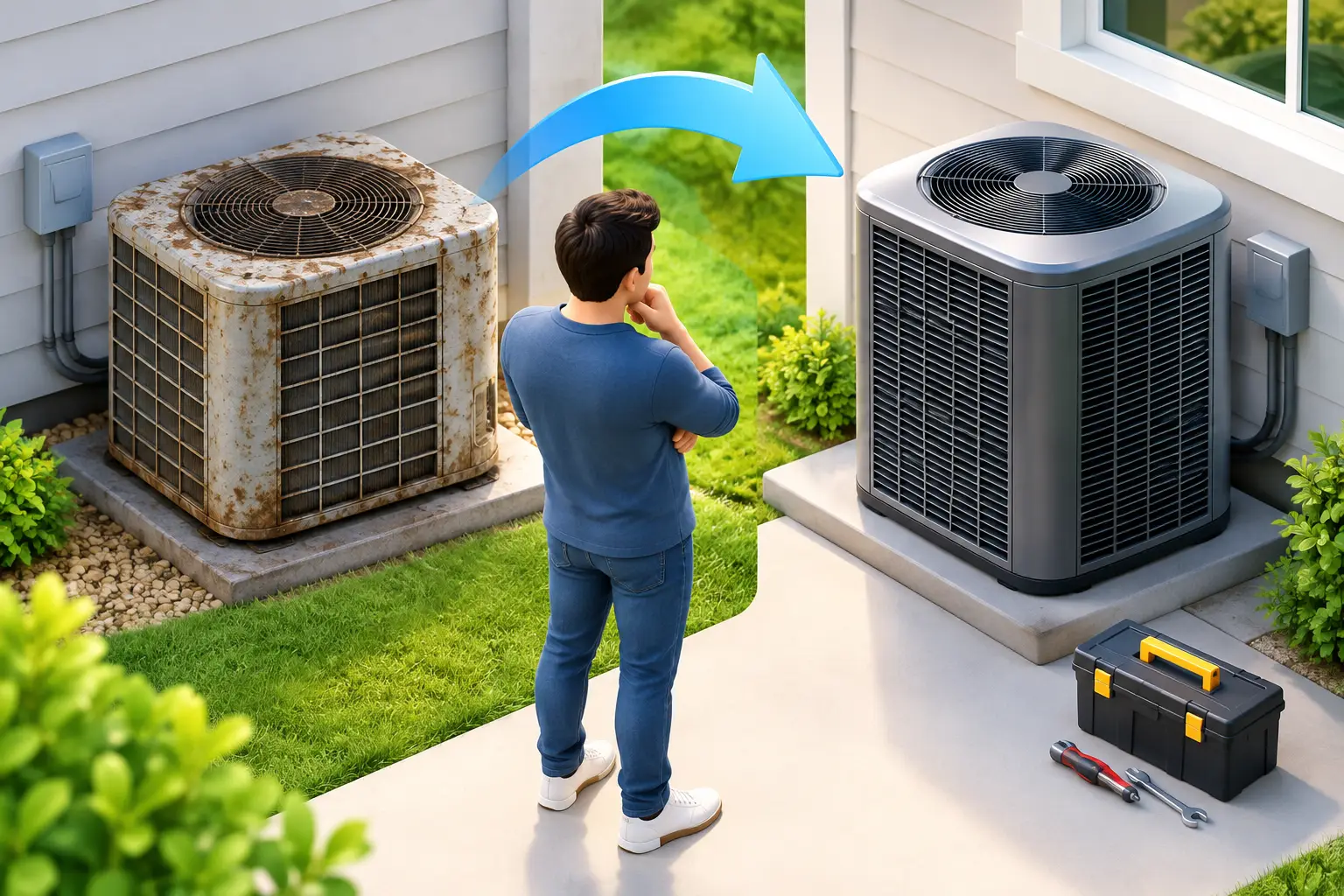
Replacement often makes more sense when the equipment has reached the later part of its service life and the repair addresses a major component. Think compressor, evaporator coil, condenser coil, or a significant refrigerant leak. These repairs can be costly, and they do not reset the age of the rest of the system.
The repair bill is becoming too large
A helpful rule of thumb is to multiply the repair cost by the age of the system. If a $1,200 repair on a 12-year-old air conditioner produces a number above $5,000, replacement deserves serious consideration. It is not a hard rule, but it gives you a practical way to weigh an immediate repair against a new system with a full warranty and lower operating costs.
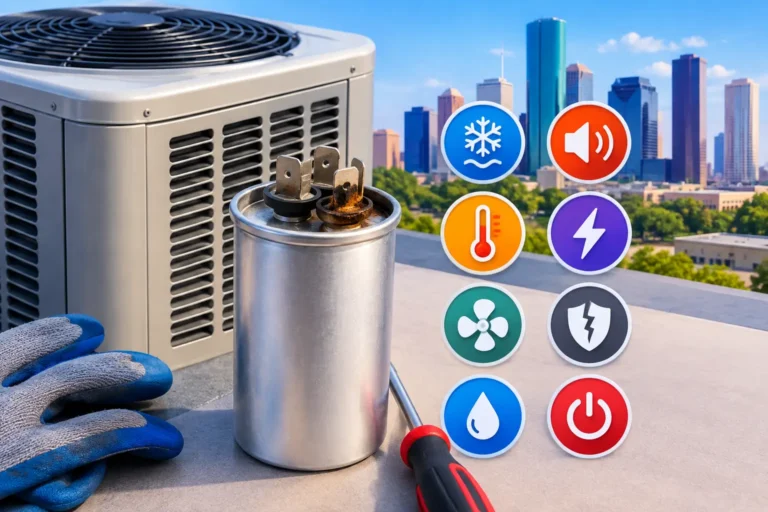
Also consider what the repair actually buys you. Replacing a failed capacitor or contactor can be a straightforward, worthwhile repair. Replacing a compressor or repairing a recurring refrigerant leak on an older unit may only delay the next expense. A qualified technician should explain both paths clearly, including the expected condition of the remaining equipment.
Breakdowns are becoming part of the season
One service call does not mean your AC is finished. Several calls in one or two cooling seasons usually indicate a system that is losing reliability. This matters especially for Houston homeowners, restaurant operators, and property managers who cannot afford a surprise outage during extreme heat.
Frequent repairs also create indirect costs: missed work, uncomfortable tenants or customers, potential downtime, and emergency service decisions made under pressure. Planned replacement gives you time to compare efficiency levels, available rebates, equipment configurations, and financing options instead of accepting whatever is available during an emergency.
Your rooms are no longer consistently comfortable
An air conditioner can run all day and still fail at its job. Hot bedrooms, warm upstairs areas, weak airflow, short cycling, or rooms that never seem to reach the thermostat setting are all signs that deserve attention.
Sometimes the problem is repairable. A dirty coil, failing blower motor, duct leakage, thermostat issue, or damaged insulation may be the real cause. In other cases, the system is undersized, oversized, or simply worn down. Replacing equipment without evaluating the ductwork, airflow, and load requirements can leave the same comfort issues in place, even with a new unit.
Humidity is staying high indoors
Cooling and dehumidification work together. When an AC is properly designed and operating correctly, it removes moisture while it cools. If your house feels clammy at 74 degrees, windows show condensation, or musty odors are becoming common, the issue may be more than temperature.
High indoor humidity can make occupants feel warmer, contribute to mold concerns, and put added stress on finishes and furnishings. A professional assessment can determine whether the answer is AC repair, better airflow control, zoning, a variable-speed system, duct improvements, or a whole-home dehumidifier. In Houston, moisture management should be part of the replacement decision, not an afterthought.
Energy bills are rising without another explanation
Utility bills naturally rise when temperatures do. But if your cooling costs keep climbing compared with similar weather periods, an aging air conditioner may be using more energy to deliver less comfort. Dirty components, low refrigerant, duct losses, and mechanical wear can all reduce efficiency.
New equipment can offer meaningful efficiency improvements, particularly when paired with correct sizing and installation. The savings will vary based on your existing system, home performance, thermostat settings, and operating hours. It is better to view efficiency as one part of the return on investment, alongside reliability, comfort, humidity control, warranty coverage, and possible utility rebates.
The system uses an outdated refrigerant
Many older systems use R-22 refrigerant, which is no longer manufactured or imported in the United States. Supplies may still be available, but they are limited and can be expensive. If an R-22 system develops a significant leak, investing in a major repair may not be the best long-term value.
Newer systems use current refrigerants and are designed to meet modern efficiency standards. That does not mean every R-22 unit must be replaced immediately. If it is cooling well and does not need a major repair, you can plan ahead. If it needs refrigerant work or a costly component, replacement becomes much easier to justify.
Noise, odors, and poor air quality are becoming normal
Grinding, rattling, banging, electrical smells, persistent mustiness, or visible water around the indoor unit should never be ignored. Some causes are minor, while others can point to safety, drainage, electrical, or mechanical concerns that need prompt service.
For commercial spaces, these symptoms can affect customer experience and employee comfort as well as equipment reliability. Kitchens, restaurants, multi-zone offices, and tenant spaces often require a more detailed look at ventilation, exhaust makeup air, controls, and capacity. The right replacement may not be a larger version of the old system.
Repair or Replace? Compare the Full Cost, Not Just Today’s Bill
The least expensive repair is not always the least expensive decision. Start with the repair estimate, but also ask how likely the system is to need additional work, whether parts are readily available, and how much useful life the repair may realistically add.
Then compare that information with a replacement proposal that includes properly matched equipment, installation scope, warranty details, projected efficiency, and any qualifying rebates. A new system should be designed around the building, not selected only by the size of the existing unit. Square footage is one input, but insulation, window exposure, duct condition, occupancy, ceiling height, heat-producing equipment, and humidity all matter.
For a business, include the cost of disruption. Replacing a failing unit on a planned schedule may protect operating hours and customer comfort. For a homeowner, it may prevent an emergency replacement during the busiest part of summer, when choices can feel limited.
Choose a Replacement That Solves the Actual Problem
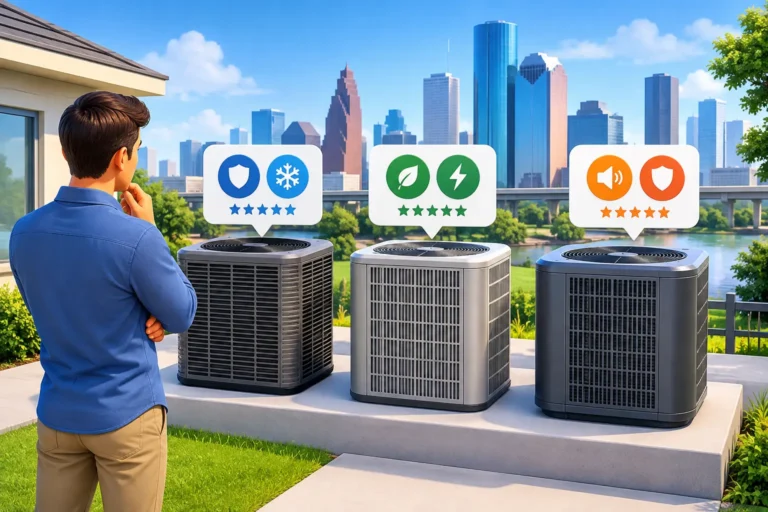
A traditional split system remains a strong choice for many homes, but it is not the only option. Variable-speed equipment can improve comfort and humidity control by running at lower capacity for longer periods. Heat pumps provide efficient cooling and heating in one system. Ductless units can be ideal for additions, garages, rooms with persistent hot spots, or spaces where extending ductwork is impractical.
For larger homes and commercial properties, zoning or VRF systems may provide better control across rooms or tenant areas with different cooling needs. These systems require thoughtful design and experienced installation, but they can improve comfort and reduce energy waste in the right application.
Ask for an assessment that looks beyond the outdoor unit. Koolpro evaluates equipment condition, refrigerant performance, electrical components, airflow, ducts, drainage, thermostat controls, and indoor humidity before recommending a path forward. That process helps separate a repairable problem from a replacement opportunity and gives you options built around your priorities.
A new air conditioner should feel like relief, not another source of uncertainty. If your system is aging, unreliable, or no longer keeping up with Houston heat and humidity, schedule an evaluation before the next breakdown forces the decision. You will have more time to choose the comfort, efficiency, and protection that fit your property.