A busy dinner service can turn a comfortable dining room into a costly problem in less than an hour. When heat from grills, fryers, ovens, dishwashers, and refrigeration spills into adjacent spaces, restaurant kitchen cooling becomes more than an employee-comfort issue. It affects food quality, guest experience, equipment reliability, energy bills, and the pace of service.
Houston restaurants face an added challenge: extreme outdoor heat and humidity. A standard comfort cooling system may keep up in the morning, then struggle once cooking equipment, staff, and customers are all generating heat at once. The right solution starts with understanding that kitchen cooling and kitchen ventilation must work together.
Why Restaurant Kitchen Cooling Is Different
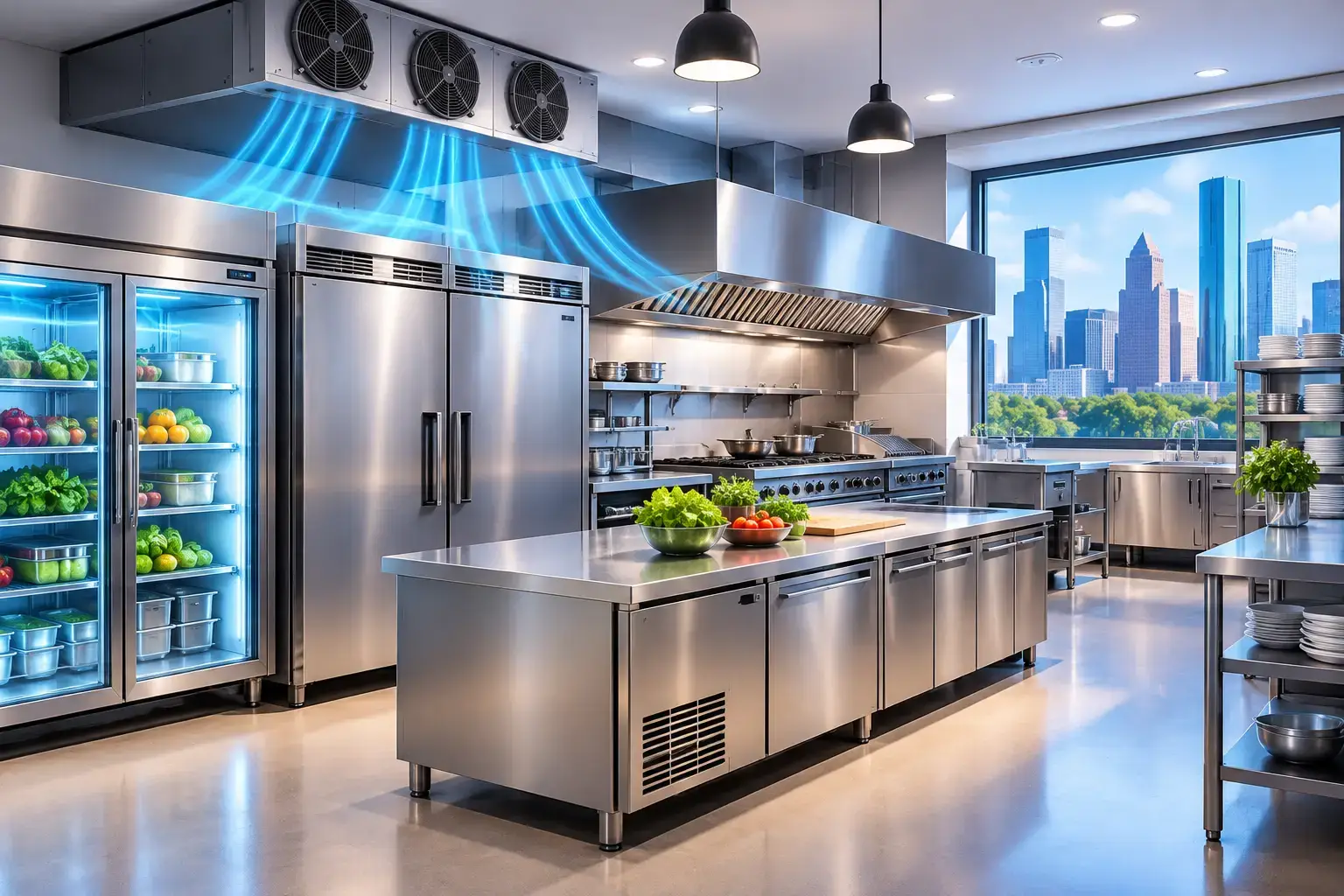
A restaurant kitchen has a much higher heat load than a typical commercial space. Cooking equipment produces sensible heat, while steam from cooking, dishwashing, and cleaning adds moisture to the air. Exhaust hoods remove heat, smoke, grease-laden vapors, and odors, but they also pull conditioned air out of the building.
That last point is where many cooling problems begin. If the exhaust system removes large volumes of air without properly designed makeup air, the building can become negatively pressurized. Doors become difficult to open, hot outdoor air gets pulled through cracks and entrances, and conditioned air from the dining room may get drawn into the kitchen. The AC may run continuously without delivering consistent comfort.
Simply installing a larger air conditioner is rarely the right answer. Oversized equipment can short-cycle, struggle with humidity control, and increase operating costs. A dependable design considers cooking load, hood exhaust volume, makeup air, kitchen layout, occupancy, and the connection between back-of-house and front-of-house areas.
The Systems That Keep a Commercial Kitchen Comfortable
Effective restaurant kitchen cooling usually involves several systems working in coordination. The best combination depends on the menu, equipment lineup, hours of operation, building layout, and whether the restaurant is a new build or an existing space with ongoing comfort complaints.
Exhaust Hoods and Makeup Air
The exhaust hood is the first line of defense against heat and contaminants generated at the cook line. Type I hoods are generally used over grease-producing equipment, while Type II hoods handle heat, steam, and condensate from equipment such as ovens or dishwashers. Hood design, capture performance, and airflow balance all matter.
Makeup air replaces the air being exhausted. In Houston, that replacement air often needs to be conditioned or tempered. Bringing untreated hot, humid outdoor air directly into the kitchen can make the space uncomfortable and force cooling equipment to work much harder. Properly introduced makeup air helps prevent drafts at the cook line while supporting stable building pressure.
There is a trade-off. Conditioning large volumes of makeup air requires equipment capacity and energy, but failing to address it can lead to even higher costs, humidity problems, and complaints from both staff and guests.
Dedicated Kitchen Air Conditioning
Kitchen spaces often need cooling separate from the dining room. A dedicated system allows operators to address the kitchen’s changing heat load without overcooling the rest of the restaurant. It also prevents kitchen odors and heat from traveling through shared return-air paths.
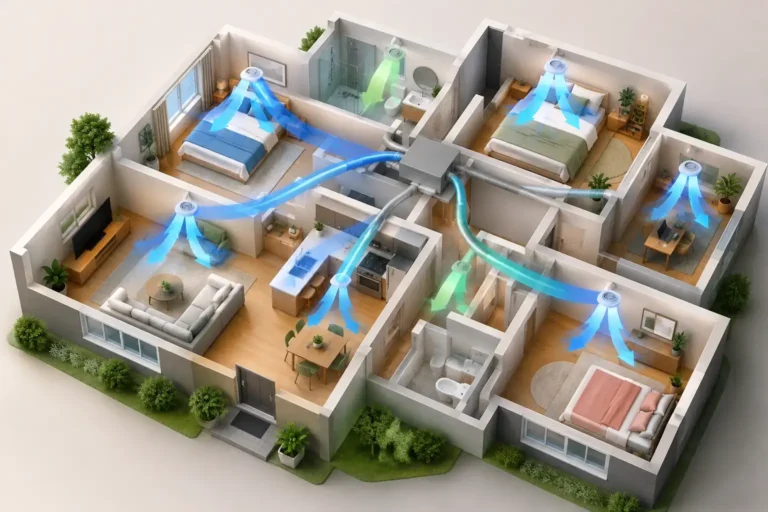
For smaller kitchens or targeted problem areas, ductless systems can be a practical option when installed in appropriate locations away from grease exposure and direct cooking contaminants. For larger restaurants, multi-zone solutions can provide individual temperature control for prep areas, offices, dining spaces, and other occupied zones.
Commercial VRF systems can be especially useful in restaurants with varied comfort needs. They provide zoning flexibility and can help owners manage energy use across spaces that operate at different temperatures and schedules. However, VRF is not a substitute for a properly engineered hood, exhaust, and makeup-air strategy. The kitchen’s ventilation requirements must be addressed first.
Humidity Control
Houston humidity can make a kitchen feel hotter than the thermostat indicates. Excess moisture contributes to slippery floors, condensation, odors, mold risk, and discomfort. It can also put unnecessary stress on refrigeration equipment and affect indoor conditions in customer-facing areas.
Good humidity management starts with balanced ventilation and correctly sized cooling equipment. In some facilities, dedicated dehumidification or outdoor-air treatment may be appropriate. The right approach depends on how much outside air enters the building, how the kitchen is used, and whether humidity is affecting just one area or the entire restaurant.
Signs Your Kitchen Cooling Design Needs Attention
Some restaurant HVAC problems are easy to recognize, while others show up as recurring operating issues. If staff members regularly complain that the cook line is unbearable, that is worth investigating. So are dining-room temperature swings during peak service, condensation on vents or ceilings, musty odors, and doors that pull shut or resist opening.
Other warning signs include unusually high electric bills, frequent AC repairs, greasy buildup near supply vents, and cooling equipment that runs all day without reaching the set temperature. These symptoms can point to inadequate capacity, poor airflow, unbalanced exhaust, dirty coils, failing controls, or makeup air that is not being delivered correctly.
A professional assessment should look beyond the thermostat. Technicians should evaluate airflow, static pressure, duct condition, equipment performance, filtration, drain systems, ventilation controls, and the condition of rooftop units or split systems. In a commercial kitchen, the source of the discomfort is often a system interaction rather than a single failed component.
Design Choices That Protect Operations and Energy Costs
Restaurant owners understandably focus on the upfront price of a new system or repair. But kitchen HVAC decisions should also account for downtime, staff retention, utility costs, maintenance access, and the expected life of the equipment.
High-efficiency equipment can lower operating costs when it is selected and installed for the actual load. Variable-speed technology, zoning controls, and properly managed ventilation can reduce waste during slower periods while still providing capacity for a full dinner rush. Demand-controlled kitchen ventilation may also be worth evaluating for certain operations because it can adjust exhaust airflow based on cooking activity. It is not right for every kitchen, but it can offer meaningful savings where compatible.
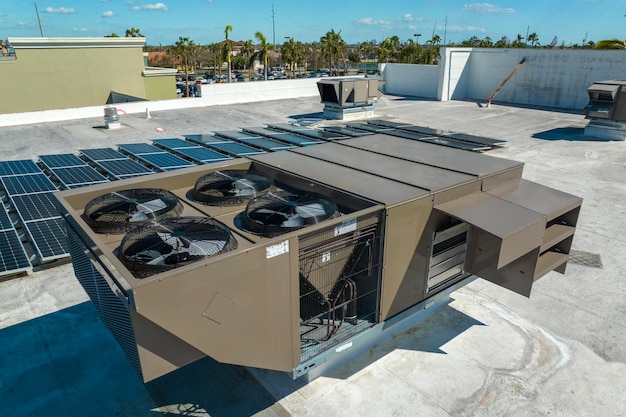
Equipment placement matters as well. Rooftop units and outdoor condensers need service access, adequate clearance, and protection from grease discharge and heat recirculation. Indoor components need filtration and maintenance plans that reflect the kitchen environment. A system that is efficient on paper can lose performance quickly if grease, dirt, and neglected drains restrict airflow or cause service issues.
Maintenance Is Part of Restaurant Kitchen Cooling
Restaurants cannot afford to wait for a complete breakdown during a busy shift. Scheduled HVAC maintenance helps identify worn belts, dirty coils, clogged filters, refrigerant concerns, failing capacitors, drainage issues, and control problems before they interrupt service.
Kitchen environments typically require more frequent attention than standard office spaces. Filter changes, coil cleaning, condensate drain inspections, and airflow checks should follow a schedule based on operating hours, cooking volume, and grease exposure. The exhaust hood and fire-suppression system also require their own code-driven inspections and cleaning, coordinated separately from HVAC service.
A maintenance plan should document equipment condition and help restaurant operators budget for repairs or replacement. This makes it easier to make an informed decision when an aging unit becomes unreliable rather than reacting under pressure on the hottest day of the year.
A Better Starting Point for Houston Restaurant Owners
Whether you are opening a new restaurant, remodeling a kitchen, or trying to fix an uncomfortable cook line, start with a whole-system evaluation. Share your operating hours, menu, equipment list, hood details, floor plan, comfort complaints, and utility concerns. Those details help determine whether the problem involves ventilation, cooling capacity, humidity, controls, ductwork, or a combination of factors.
Koolpro helps Houston restaurant operators evaluate commercial cooling, ventilation, zoning, and high-efficiency equipment with a focus on reliable performance and practical long-term value. A properly planned system does more than lower the temperature. It helps your team work more comfortably, protects the guest experience, and gives your operation a better chance to perform consistently through Houston’s toughest weather.