Houston air conditioners remove a surprising amount of water from the air, especially through a long stretch of humid weather. That moisture has to go somewhere. When you clean AC condensate drain components regularly, you help prevent one of the most avoidable cooling problems: a backed-up drain line that leads to water damage, shutdowns, odors, or unexpected service calls.
The drain is not a cosmetic part of your system. It is a working safety and moisture-management system. A little preventive attention can protect your ceiling, equipment, and comfort. The key is knowing what you can safely handle and when a recurring clog points to a larger HVAC issue.
Why AC Condensate Drains Clog in Houston
Your indoor evaporator coil pulls heat and humidity from the air. As warm, moist indoor air passes over that cold coil, water forms and drips into a drain pan. From there, it flows through the condensate drain line and exits outside or into an approved plumbing connection.
Over time, that dark, damp drain path can collect dust, insulation fibers, biological growth, and sludge. In Houston’s climate, systems often run for long periods, so the drain line sees more water and more opportunity for buildup than it might in a drier region.
A partially clogged line may still drain, but slowly. Eventually, water can rise in the pan. Many newer systems have a float switch designed to turn off the AC before overflow occurs. That switch protects the home, but it can leave you without cooling on a very hot day. Older systems may not have this protection, making a clogged drain a greater water-damage risk.
Signs You Need to Clean an AC Condensate Drain
The clearest sign is water where it should not be: around the indoor air handler, near a ceiling register below an attic unit, or at the base of a closet-mounted system. A musty smell when the AC starts can also point to standing water or buildup in the pan and drain line.
Other warning signs include an AC that suddenly stops running even though the thermostat is calling for cooling, visible algae-like material at the exterior drain outlet, or weak drainage from the line. Do not assume every water issue is a simple clog. A cracked drain pan, improperly pitched drain pipe, frozen evaporator coil, damaged condensate pump, or disconnected line can produce similar symptoms.
If you see active leaking near electrical components, a furnace cabinet, or a ceiling, turn the system off at the thermostat and contact a licensed HVAC professional. Avoid running the equipment until the source is identified.
How to Clean an AC Condensate Drain Line
For many homeowners, basic drain-line maintenance is manageable if there is a clearly accessible cleanout and no active overflow. Work carefully and do not force anything into the pipe.
1. Turn the system off
Set the thermostat to Off. If your air handler has a nearby service switch, turn it off as well. This reduces the chance of the system starting while you are working and helps protect the equipment if the drain is already backing up.
2. Find the drain line and cleanout
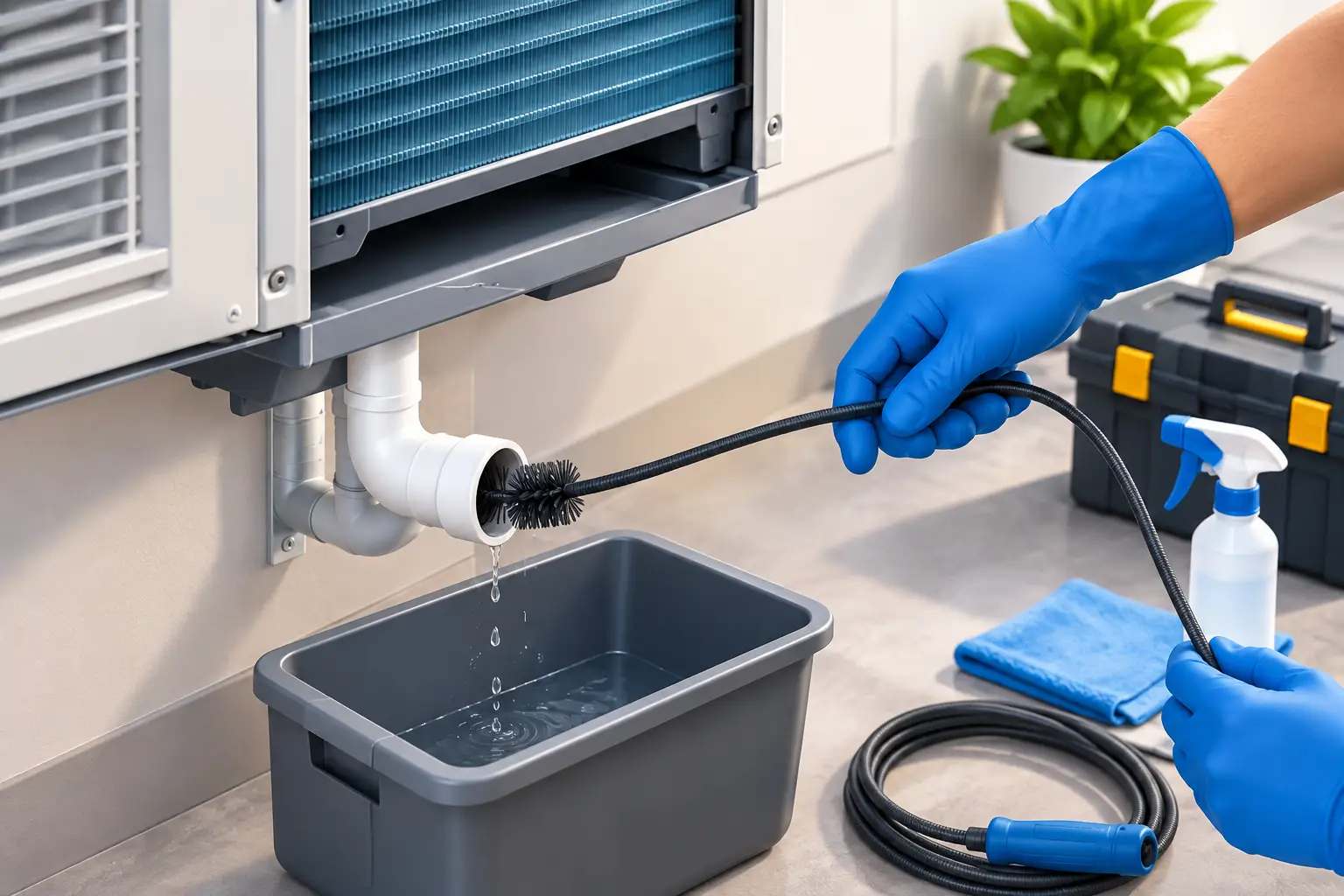
Near the indoor air handler or furnace, look for a white PVC pipe connected to the drain pan area. Many installations include a capped vertical opening or T-shaped fitting. That is typically the cleanout. In attic installations, use extra caution around ceiling framing and avoid putting weight on drywall.
Before removing a cap, place a towel and shallow container nearby. If the line is full, water may spill from the opening.
3. Check the exterior outlet
Locate where the condensate line exits outside. It may be near the outdoor unit, along an exterior wall, or above a window. Clear leaves, mulch, or insect nests away from the end of the pipe. You should never seal or cap this outlet.
A wet outlet while the AC is operating is generally a good sign. It indicates that condensate is moving through the system. A dry outlet is not automatically a problem, particularly if the system has not run long enough to produce much water, but it is worth investigating if you also have indoor drain symptoms.
4. Use a wet/dry vacuum at the outlet
For a minor clog, a wet/dry vacuum is usually the safest and most effective homeowner method. Place the vacuum hose over the exterior drain opening and create a reasonably tight seal with your hand or a cloth. Run the vacuum for one to two minutes.
You may pull out dirty water, sludge, or small debris. Dispose of the contents appropriately, then check that the pipe outlet is clear. Do not use excessive pressure from an air compressor. Strong compressed air can separate fittings, damage a drain pan connection, or push debris into a harder-to-reach section of the line.
5. Flush the accessible cleanout carefully
After vacuuming, pour a small amount of clean water into the indoor cleanout and confirm that it drains freely outside. If water immediately rises or leaks at the unit, stop. The blockage may be more substantial, or the line may have a drainage or installation issue.
Some homeowners use distilled white vinegar as an occasional rinse. It can help reduce mild buildup, but it will not solve a heavily blocked line or correct a poor drain slope. Avoid bleach and harsh drain cleaners. These products can damage components, create fumes, and are not a substitute for proper mechanical cleaning.
6. Restore power and watch the system
Replace the cleanout cap, restore power, and run the AC. Check for normal operation and verify that water is draining at the exterior outlet after the system has had time to run. If the float switch had shut the equipment down, it may reset once water has cleared. If it does not, do not bypass the switch. It exists to prevent overflow.
What a Professional Drain Service Can Catch
A drain line that clogs once may be routine maintenance. A line that repeatedly clogs deserves a closer look. The problem may be poor pipe pitch, an improperly configured trap, an undersized line, a missing vent, or buildup in a concealed section that a vacuum cannot fully clear.
Professional service also includes checking the primary and secondary drain pans, safety switch operation, condensate pump if installed, coil condition, and airflow. That broader inspection matters because a dirty filter or blower problem can contribute to a frozen coil. When the ice melts, the sudden volume of water can overwhelm a drain system that otherwise seemed adequate.
For commercial properties, restaurants, and multi-zone systems, condensate management can be more complex. Multiple air handlers, ceiling cassettes, pumps, and long drain runs need coordinated inspection. A drain failure can disrupt operations, damage finishes, or create conditions that are difficult to address during business hours.
How Often Should You Clean the AC Condensate Drain?
For most Houston homes, checking the drain line during spring maintenance and again during the peak cooling season is a practical starting point. Homes with pets, high indoor dust, heavy AC use, attic equipment, or a history of drain clogs may benefit from more frequent attention.
The right interval depends on the system and the home. A newer, well-installed system with effective filtration may need little more than routine maintenance. An older system with recurring drainage issues needs diagnosis, not repeated quick fixes. Preventive HVAC visits are a good time to have the drain pan, line, and float switch checked along with filters, coils, refrigerant performance, and electrical components.
Koolpro technicians can inspect the full condensate path as part of a maintenance visit and recommend a repair when a drain problem is caused by more than ordinary buildup. The goal is not simply to get water moving today. It is to keep cooling reliable through Houston’s toughest weather.
A clear drain line is a small detail with a large payoff. If your system is leaking, shutting down, or developing the same clog every season, address it before the next humid week turns a manageable maintenance task into water damage.