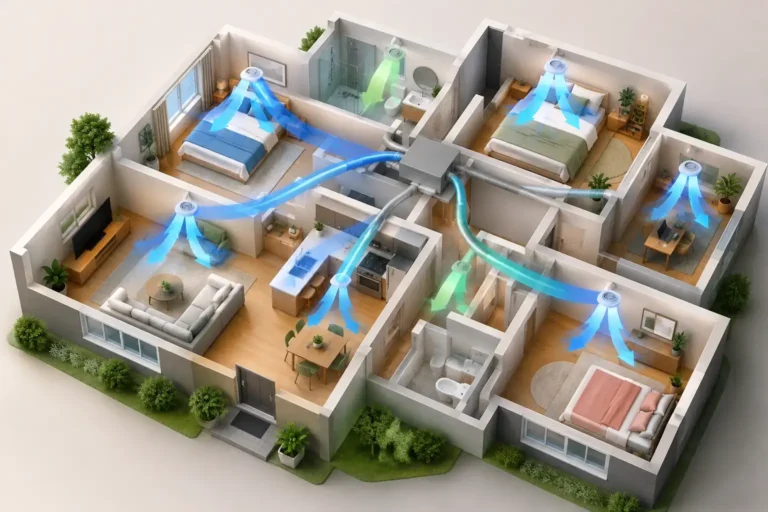
When the AC fails in a house, the family is uncomfortable. When it fails in a restaurant at noon on a Friday, the dining room empties, the line cooks work in a kitchen that is past safe, and the walk-in starts fighting the heat around it. Commercial HVAC maintenance for a Houston restaurant is not about comfort. It is about not losing a service day, and the math on that is simpler than most owners think.
Quick answer: For most Houston restaurants, a year of commercial HVAC maintenance costs less than one lost service day once you count sales, spoiled product, paid staff and the emergency call. Rooftop units here need more frequent filter and coil attention than office buildings, and make-up air balance should be checked on every visit. The goal is catching the cheap failures before they close the dining room.
If you are planning a new kitchen or a remodel, the code side of hoods, grease ducts and make-up air is covered in our guide to restaurant kitchen ventilation requirements. This article is about what happens after opening day: keeping the equipment running.
What one lost service day really costs
Owners tend to compare a maintenance contract against zero. The honest comparison is against the day the rooftop unit quits during lunch. Run your own numbers in this worksheet. We are not going to guess yours, because every restaurant is different.
| Cost of a lost day | Where to find your number |
|---|---|
| Sales from the lost service | Your POS: average sales for that day of the week |
| Product that spoils or gets comped | Prep already done, walk-in stress, meals sent back when the room is too hot |
| Labor you pay anyway | Scheduled staff for the shift, often with nothing to serve |
| Emergency service premium | After-hours or same-day rates, plus any part that has to be rushed |
| Reputation | The reviews written by guests who ate in an 85-degree dining room |
Add those up for one Friday. Then compare that number to a year of planned visits. For most places the maintenance wins before you even count the second breakdown, and on a roof that has been skipped for two summers there usually is a second one.
When not to spend: if your units are new, your filters get changed on schedule and the kitchen is balanced, you do not need the most expensive tier of anything. A maintenance program should match your equipment and your hours, not a price sheet.
Why rooftop units fail during business hours
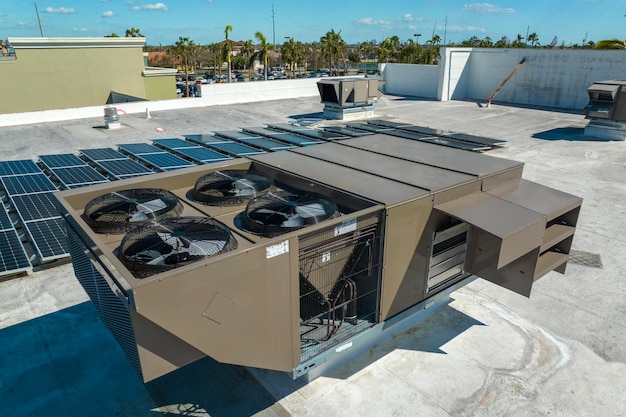
Most Houston restaurants run packaged rooftop units, where the compressor, coils, blower and often the heating section all sit in one cabinet on the roof. If you are weighing rooftop equipment against a VRF system for a new space, our comparison of VRF versus rooftop units covers the trade-offs.
Rooftop units in restaurants fail at the worst time for predictable reasons:
- Peak load equals peak business. Lunch rush lands in the hottest hours, with every burner lit. A weak component survives the morning and gives up at 12:30.
- Grease finds the coils. Kitchen exhaust and nearby vents deposit grease on roof equipment. Greasy coils plus airborne dust make a blanket that heat cannot escape through.
- The roof is brutal. A Houston roof in August runs far hotter than the air, and summer runs from May into October. Equipment up there works harder and ages faster than the same unit on the ground.
- Small parts carry big loads. Capacitors, contactors, belts and condenser fan motors are cheap. When one fails, it can take the compressor down with it, and the compressor is not cheap.
A residential case that made the rounds among homeowners shows how far apart those two outcomes can be: one company declared a 19-year-old compressor dead and quoted $14,980; another found the start capacitor reading zero and fixed it for $500. A good maintenance visit is where you find that capacitor, on a Tuesday morning, before it matters.
Make-up air: the symptoms owners notice first
A kitchen hood pulls a lot of air out of the building. The make-up air unit has to replace it. When the two drift out of balance, from a slipping belt, a clogged filter or a damper that stuck, the building goes negative and pulls air in through every gap it can find.
You will recognize the symptoms long before anyone measures anything:
- The front door is hard to open, or slams shut on its own.
- Cooking smells drift into the dining room instead of leaving through the hood.
- The dining room feels sticky no matter how low the thermostat goes, because humid outside air is being pulled in.
- Pilot lights go out or burners behave oddly.
- The hood seems weaker than it used to, and smoke rolls out the front edge.
None of these are fixed by a bigger air conditioner. It is a common and expensive mistake in restaurants: buying tonnage to fight a balance problem. It is a measurement job first. Our restaurant kitchen HVAC page covers how we approach it.
What a restaurant maintenance program should include
A visit that only swaps filters is not a program. For a restaurant, each visit should cover:
- Filters on rooftop units and make-up air, on a schedule set by how greasy and dusty your site actually is, not by a calendar default.
- Coil cleaning, condenser and evaporator, with degreasing where kitchen exhaust reaches the equipment.
- Electrical checks: capacitors against spec, contactors, amp draw on compressors and fan motors.
- Belts and bearings on blowers and make-up air fans.
- Condensate drains, so a clog does not end in water through a ceiling tile over a table.
- A balance check between hood exhaust and make-up air, especially after any change to the cook line.
- Notes on every unit: which zone it serves, what was found, what is wearing. That site knowledge is what makes an emergency call fast.
A service agreement keeps that schedule on our calendar instead of yours.
Response time is the whole service
A homeowner can be uncomfortable for a day. A restaurant measures the outage in covers. What makes a repair fast is mostly decided before anything breaks: knowing the roof access, the disconnects, which unit serves which zone and what has failed before.
One Google reviewer, John Velasco, summed up what speed looks like from the customer side: “Good great and quick! Came out and took care of the dead fan within an hour after arrival. 10/10.” And from the commercial side, USRB Service wrote: “Koolpro is knowledgeable and quick to get the job done. This is the Commercial service repair team you can count on.”
Honest timing is part of it too. Sometimes the right answer is that a part has to come in and the unit is down until tomorrow. Knowing that at 1 p.m. lets you rent a spot cooler, change the menu or close the patio. Finding out at 6 p.m. does not.
Frequently asked questions
How often should a restaurant service its HVAC in Houston?
More often than an office. Many restaurants need filter changes every month or two and a full maintenance visit several times a year, because grease and heat load the equipment faster. The right schedule depends on your cooking line and your roof.
Why is my restaurant front door hard to open?
Usually because the building is under negative pressure. The hood is pulling out more air than the make-up air unit is bringing in. It is a balance issue, not a cooling capacity issue.
Is commercial HVAC maintenance worth it for a small restaurant?
Compare a year of maintenance against one lost service day: sales, spoiled product, paid staff and an emergency call. For most restaurants, one avoided breakdown covers the program.
Will a bigger rooftop unit fix a hot, humid dining room?
Often not. If the problem is make-up air balance, a bigger unit just fights humid outside air being pulled into the building. Measure the balance first.
Walk the roof before it quits
The moment to set this up is not when the rooftop unit dies during lunch. See our commercial HVAC services, then ask us to walk your roof or call 713-714-0707. We serve restaurants and commercial buildings in Houston, Katy, Sugar Land and Fort Bend.