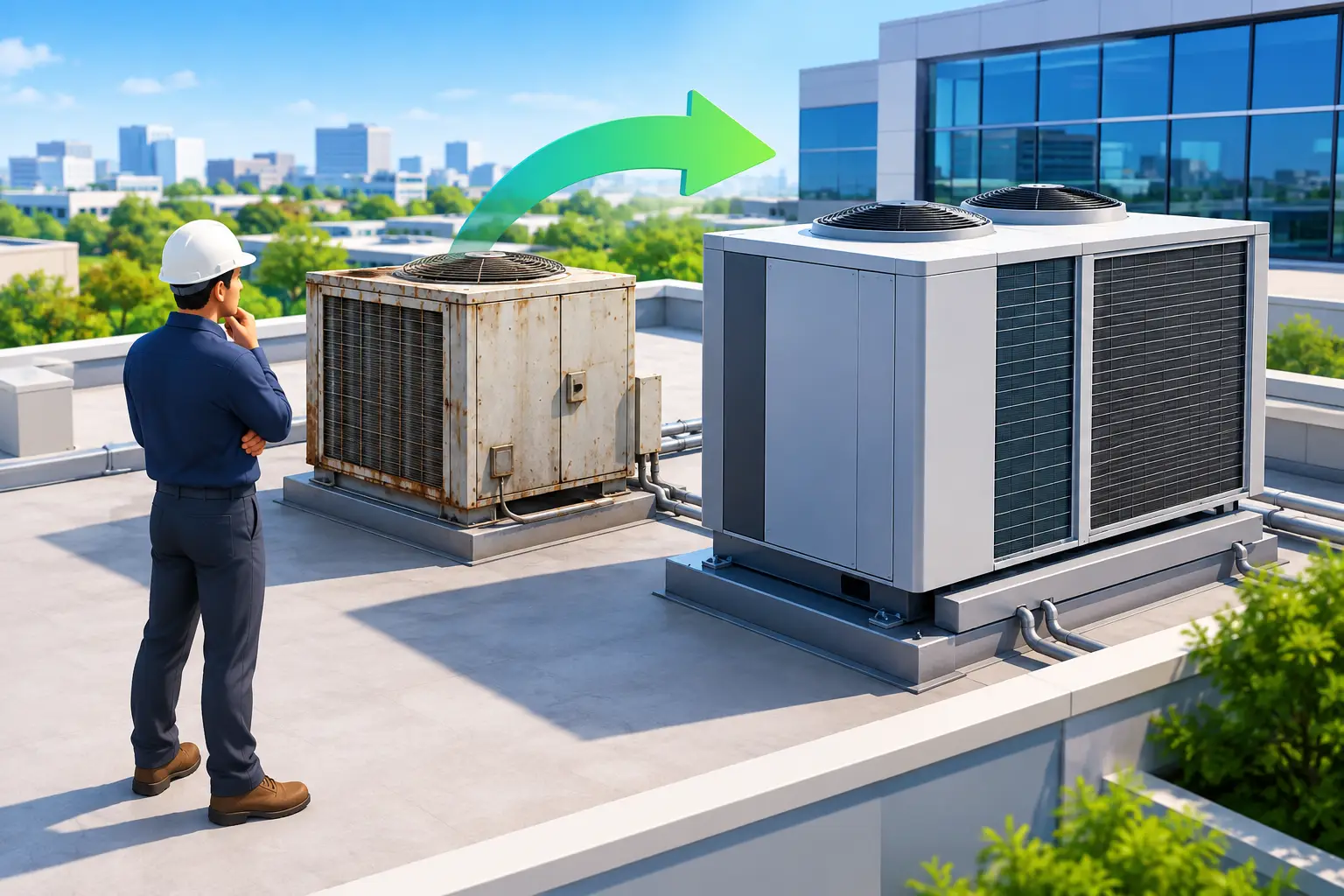
A failing rooftop unit rarely chooses a convenient time to quit. In Houston, a cooling problem can quickly affect employee comfort, customer experience, inventory, kitchen operations, and lease obligations. Commercial HVAC replacement is not simply an equipment purchase. It is a facility decision that should protect your operations now while lowering avoidable costs over the years ahead.
For some businesses, a targeted repair is the responsible answer. For others, continuing to repair an aging or undersized system means accepting inconsistent temperatures, surprise shutdowns, rising utility bills, and frustrated occupants. The right path depends on the condition of your equipment, the way your building is used, and the performance you need from the system.
When Commercial HVAC Replacement Makes More Sense Than Repair
Every commercial system reaches a point where repairs stop being a practical long-term strategy. Age is one signal, but it is not the only one. A well-maintained unit may continue operating beyond its expected service life, while a poorly matched or heavily used system may struggle much sooner.
Frequent service calls are often the clearest warning. If the same unit needs repeated compressor, blower motor, refrigerant, electrical, or control repairs, those costs can add up quickly. More concerning, each repair can leave you vulnerable to another interruption during Houston’s hottest months.
Replacement deserves serious consideration when your system is roughly 12 to 15 years old, repair costs are substantial, or the equipment no longer delivers reliable comfort. Businesses should also look beyond whether the unit turns on. Hot and cold spots, humidity problems, loud operation, poor air movement, and difficulty maintaining set temperatures all point to a system that may no longer fit the space.
A restaurant, for example, has different demands than an office suite. Kitchen heat, occupancy changes, cooking equipment, ventilation requirements, and extended operating hours can place major strain on cooling equipment. A retail store may need stable comfort near entrances and storefront glass, while a medical office may need better zoning and air-quality control. Replacing like for like without evaluating those conditions can repeat the original problem.
The Cost Question: Upfront Price vs. Operating Cost
The purchase price of new equipment matters, but it should not be the only number guiding the decision. Commercial HVAC systems affect monthly energy use, maintenance needs, tenant satisfaction, productivity, and the risk of emergency downtime. A lower initial quote can become expensive if the equipment is inefficient, improperly sized, or installed without attention to ductwork, controls, and ventilation.
High-efficiency systems can reduce energy waste, especially when they replace older equipment that runs hard through long Houston cooling seasons. The actual savings depend on your building load, utility rates, operating hours, insulation, maintenance history, and the condition of the existing distribution system. A professional evaluation should set realistic expectations rather than promise a one-size-fits-all savings figure.
There may also be rebates available for qualifying efficiency upgrades. Businesses should ask about current utility incentive opportunities before selecting equipment, since rebate eligibility can influence the final project cost. Financing can also help preserve working capital for companies that need replacement now but prefer predictable monthly payments.
The best value is often a system designed for total cost of ownership. That means selecting equipment that meets the building’s needs, performs efficiently at part load, can be serviced properly, and is backed by dependable installation workmanship and warranty coverage.
Start With a Load Calculation, Not a Guess
Commercial comfort problems are frequently blamed on old equipment when the deeper issue is system design. Before recommending replacement, an experienced contractor should assess the building rather than relying solely on the nameplate of the existing unit.
That assessment includes square footage, ceiling heights, insulation, window exposure, occupancy, heat-producing equipment, operating schedules, ventilation needs, and the condition of ducts or refrigerant lines. Changes since the last installation matter. A remodeled suite, added kitchen equipment, new office partitions, expanded seating, or a higher employee count can all change the cooling load.
Oversizing is not a shortcut to better comfort. An oversized system can cycle on and off too often, which may reduce humidity removal and create uneven temperatures. Undersized equipment, on the other hand, can run continuously without meeting demand. In Houston’s humid climate, the right capacity and moisture control are essential to comfort, indoor air quality, and equipment longevity.
Choosing the Right System Type
Traditional packaged rooftop units remain a practical option for many commercial buildings. They are familiar, durable, and well suited to a range of retail, office, and light commercial applications. The right configuration can provide dependable cooling, heating, ventilation integration, and straightforward maintenance access.
For properties with multiple zones or changing occupancy, a VRF system may provide more precise control. VRF technology can serve separate areas independently, helping businesses avoid cooling empty rooms or forcing every zone to follow the same schedule. It can be especially useful for offices, mixed-use spaces, tenant build-outs, and buildings where ductwork is limited or difficult to modify.
Ductless systems can solve comfort issues in additions, server rooms, isolated offices, and spaces with persistent hot spots. Dedicated outdoor air systems may also be appropriate when ventilation and humidity management need special attention. The right answer depends on the building and its use, not on which equipment category is most familiar.
Plan the Installation Around Your Operations
A commercial replacement project should not create more disruption than necessary. Early planning helps protect business hours, customer access, inventory, and staff productivity.
A clear installation plan should address equipment lead times, crane access for rooftop units, electrical requirements, permits, thermostat or control upgrades, temporary cooling needs, and the timing of shutdowns. For restaurants and other high-demand facilities, work may need to happen before opening, after closing, or in carefully phased stages.
Communication matters as much as scheduling. Your facilities contact should know what work is happening, which areas will be affected, how long interruptions may last, and what the team needs for safe access. A professional crew also protects the work area, removes old equipment responsibly, and tests the system thoroughly before turning the space back over.
At Koolpro, the goal is to make complex HVAC decisions feel manageable. That begins with a tailored recommendation and continues through equipment selection, installation coordination, startup, and follow-up support. Certified technicians can help business owners and property managers compare options without losing sight of the practical question: what will keep this building comfortable and operational?
Do Not Overlook Airflow, Controls, and Humidity
New equipment cannot correct every comfort issue by itself. If ducts leak, return-air pathways are restricted, dampers are failing, or thermostats are poorly located, the replacement system may not perform as expected.
Controls are particularly valuable in commercial spaces. Programmable scheduling, zoning, occupancy-based settings, and remote monitoring can help reduce unnecessary runtime while giving facilities teams better visibility into performance. The simplest control setup is not always the best one, but overly complicated controls can be difficult for staff to manage. The right level of automation should match your team and your building.
Humidity is another major factor in the Houston area. Excess indoor moisture can make rooms feel warmer than the thermostat reading, contribute to odors, and create uncomfortable conditions for customers and employees. Proper equipment sizing, sensible ventilation, drainage, and dehumidification strategies should be part of the replacement conversation.
Questions to Ask Before Approving a Replacement
Before choosing a proposal, ask how the contractor determined the system size, whether ductwork and ventilation were evaluated, and how the installation will affect normal operations. Ask what efficiency rating and operating features are being recommended, what warranty protection is included, and what maintenance will be needed to preserve performance.
It is also reasonable to ask about alternatives. In some cases, a repair, control upgrade, zoning adjustment, or targeted ductless solution may solve the immediate problem. A trustworthy recommendation explains why replacement is warranted, what risks remain if you wait, and where a less expensive option may still make sense.
The strongest commercial HVAC replacement plan is one that gives you fewer surprises after installation. When your system is sized correctly, installed carefully, and maintained consistently, your team can focus less on the thermostat and more on running the business.