Newer Houston homes are built tight on purpose. Better insulation, sealed envelopes and modern windows keep the heat out and the cooling in. The trade-off nobody mentions at closing is that the same house barely breathes, and whatever is generated indoors stays indoors. An ERV system is how Houston homes get fresh air back without inviting August humidity in with it. It is also a box that some houses need and many don’t, so this guide covers both sides.
Quick answer: An ERV (energy recovery ventilator) swaps stale indoor air for filtered outdoor air and uses the outgoing air to pre-treat the incoming air, removing part of its heat and moisture. In Houston it makes sense for tight, newer or heavily renovated homes and for sealed upper floors like converted attics. It is not a dehumidifier, and in a drafty older house it is not your first fix.
A house we were asked about this year
A homeowner reached out about adding an ERV to a home of roughly 5,000 square feet on three floors, with the attic converted into living space. It is a textbook candidate, and a good example of why an ERV is a design question, not a product you pick off a shelf.
Three floors means three very different air situations. The ground floor has doors opening all day. The middle floor is bedrooms. The converted attic is under the roof, sealed off, and often served by its own small system or a long run from below. That top floor is usually where the air feels heaviest. Before recommending anything, the questions are: how many systems serve the house, which floor feels stale, how tight the envelope actually is, and whether humidity is already a problem. The answers decide whether one ERV tied to one system is enough, or whether the ventilation needs to reach each floor on its own.
What a sealed house does to your air
Cooking, showers, cleaning products, new furniture, pets and people all release moisture and odors. In a leaky 1970s house, that mix drifted out through gaps around windows and doors. In a tight house it builds up, and you notice it three ways:
- The air feels stale or stuffy, especially in the morning.
- Smells linger for hours instead of clearing.
- Humidity stays high even though the AC runs and the thermostat is satisfied.
Opening a window fixes it in a mild climate. In Houston, opening a window in August means letting in hot, wet air your AC then has to remove all over again. If sticky air is your main complaint, read why your house is humid with the AC on first. Ventilation is only one of the possible causes.
How an ERV works, and why not an HRV
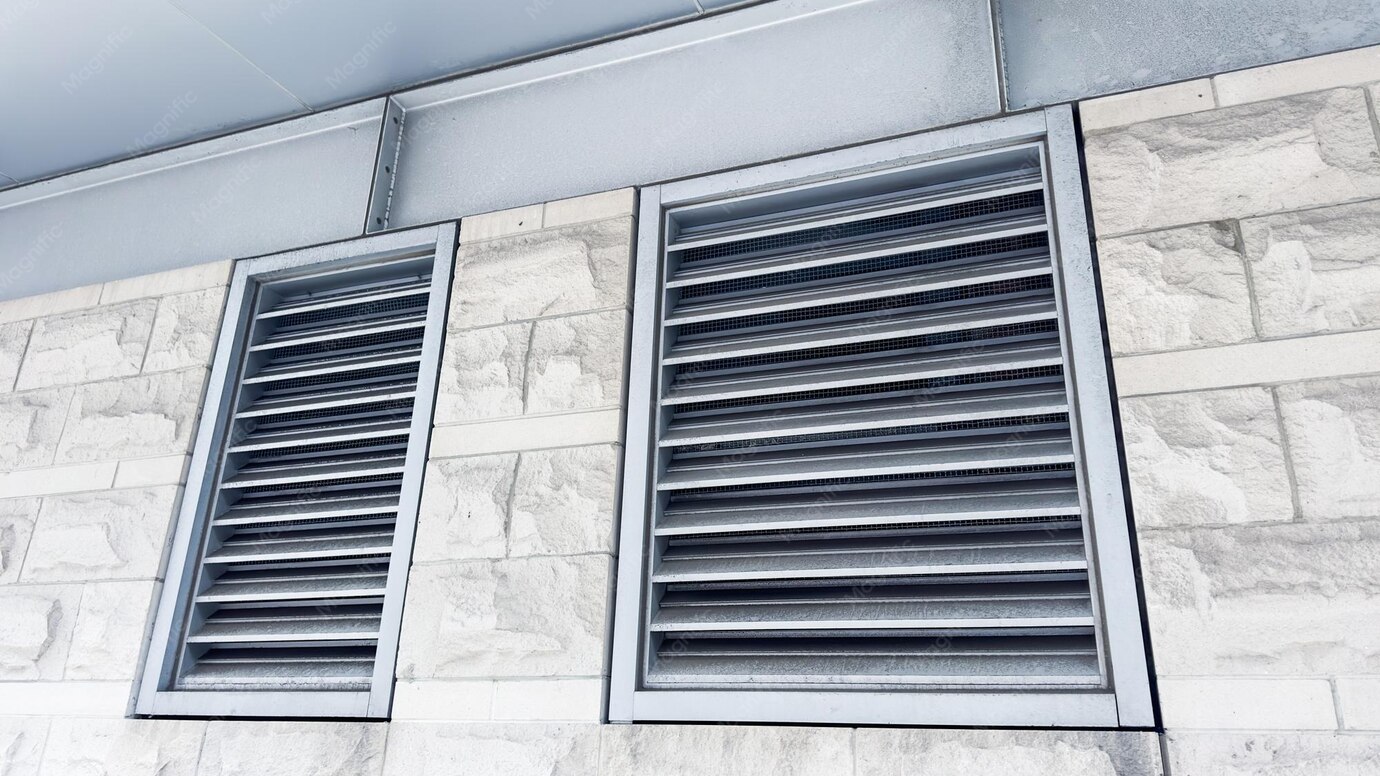
An energy recovery ventilator brings in a controlled amount of outdoor air and exhausts an equal amount of indoor air. The core in the middle is the clever part. The two air streams pass close to each other without mixing, and the cool, drier outgoing air pre-treats the hot, humid incoming air.
In a Houston summer, the fresh air reaching your system has already given up part of its heat and part of its moisture. You get ventilation without handing your AC a completely new load every time the unit runs.
An HRV, its cousin, transfers heat but not moisture. That suits a cold, dry climate. Here the moisture transfer is the point, which is why we install ERVs and not HRVs in this area.
| What you want | What actually does it | What it does not do |
|---|---|---|
| Fresh air in a tight house | ERV | Remove humidity already in the house |
| Lower indoor humidity | Whole-home dehumidifier, correct AC sizing | Bring in fresh air |
| Fewer allergens and dust | Better filtration | Replace stale air |
| Fresh air in a cold, dry climate | HRV | Handle Houston moisture |
Who actually needs one, and who doesn’t
These are the situations where an ERV earns its place:
- New or recently renovated homes built to current energy codes, where the envelope is genuinely tight.
- Large homes with converted attics or additions, like the house above, where an upper floor is sealed and stagnant.
- Households with allergies or asthma, where controlled, filtered fresh air helps. Our guide to air quality upgrades for newborns and allergy sufferers covers where it fits with other options.
And where we would tell you to hold your money:
- Older, drafty homes. The house is already ventilating itself, badly. Sealing and insulation come first.
- Homes with a humidity problem and no dehumidification. An ERV lowers the moisture that ventilation adds. It does not remove the moisture already there. In many tight Houston homes the right package is an ERV plus a whole-home dehumidifier, or the dehumidifier alone.
- When the real complaint is dust. That is a filtration problem. A better filter costs far less.
What installation involves
The unit is roughly the size of a carry-on suitcase and usually sits in the attic near the air handler. It needs two ducts to the outside, two connections to your ductwork, a condensate drain and power. On many Houston homes it is a one-day job. The unit usually runs on a timer or a control rather than full blast all day.
Sizing matters more than brand. Too small and you get no meaningful ventilation. Too large and you pull in more outdoor air than the system can handle, which shows up on your bill and in your humidity. The calculation depends on square footage, bedrooms, number of floors and how tight the house is. In a three-story home it also depends on which systems serve which floors.
Keep in mind the attic in August runs 130 to 140 degrees. The ERV’s ducts need the same insulation and sealing as the rest of your system, or the fresh air picks up heat on its way in.
Maintenance is not optional
An ERV has filters and a core that need regular cleaning. Neglected, it moves less air and the filters load up with Houston pollen. We check it on the same visit as the rest of the system. Mason Rollins wrote this about Sebastian after his annual maintenance visit: “Super professional, knowledgable, polite, and efficient.” A full indoor air quality review looks at ventilation, filtration and humidity together, so you don’t buy one box to solve a problem that belongs to another.
Frequently asked questions
Does an ERV dehumidify my house?
No. It reduces the moisture that fresh outdoor air would otherwise bring in, but it does not remove humidity already in the house. That is a dehumidifier’s job.
Is an ERV worth it in an older Houston home?
Usually not as a first step. Older homes tend to leak plenty of air. Sealing and insulation come first, then ventilation becomes a real question.
Will an ERV raise my electric bill?
It uses fan power and adds some load, but much less than bringing in untreated outdoor air. A correctly sized unit on a control keeps that small.
Does a three-story house need more than one ERV?
Sometimes. It depends on how many systems serve the house and which floors need fresh air. That is decided on site, not from the square footage alone.
If your house is newer, or you finished an attic or an addition, and the air feels heavy no matter what the thermostat says, tell us about your home here or call 713-714-0707. Include the square footage, number of floors and roughly when it was built. We serve Houston, Katy, Sugar Land and Fort Bend, and we will tell you plainly whether an ERV belongs in your house.