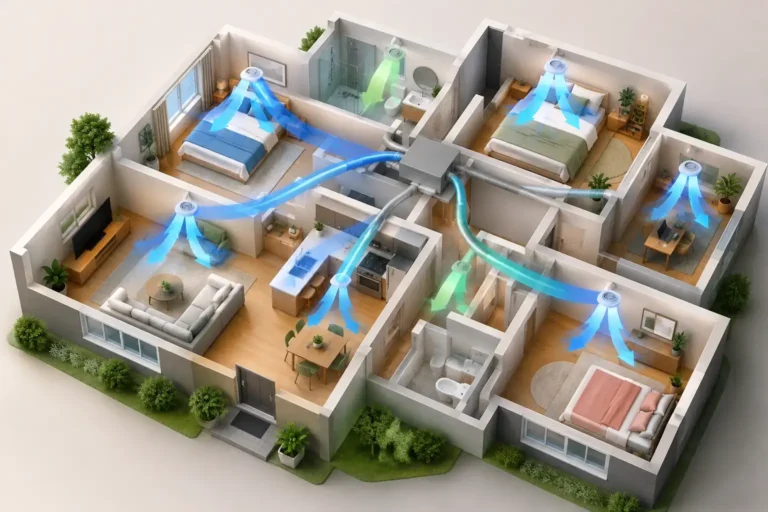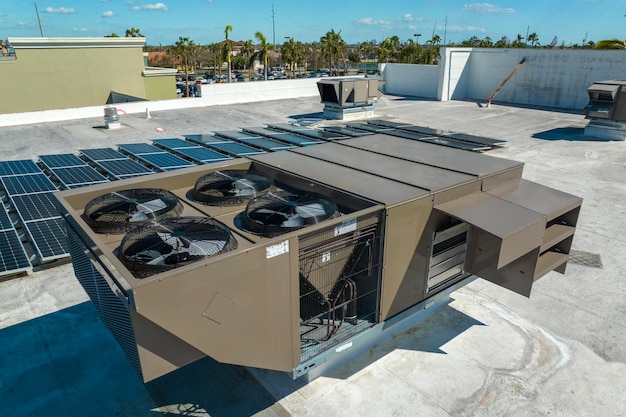

A bedroom that stays warm while the living room feels like a refrigerator is more than a daily annoyance. It often means your HVAC system is moving air unevenly, wasting energy as the thermostat works harder to satisfy one area of the home. Learning how to balance airflow between rooms can improve comfort, reduce strain on your equipment, and help your cooling system perform better through a Houston summer.
Some airflow issues have simple fixes. Others point to duct design, return-air, insulation, or system-sizing concerns that deserve a professional evaluation. The key is making adjustments carefully instead of closing vents at random and hoping for a better result.
Why rooms have uneven airflow
Your thermostat measures the temperature where it is installed, not in every room. If it is located in a central hallway, the system may shut off once that hallway reaches the set temperature, even when a sunny upstairs bedroom is still several degrees too warm.
Several factors can create that difference. Rooms farthest from the indoor unit may receive less conditioned air. Second floors absorb rising heat, while west-facing rooms gain heat from afternoon sun. Closed doors can limit the path air needs to return to the system. A dirty filter, blocked return grille, leaking ducts, poorly adjusted dampers, or undersized ductwork can make the problem more noticeable.
In Houston, humidity adds another layer. A room can feel uncomfortable even when its temperature is close to the thermostat setting if it is holding more moisture than the rest of the house. That is why airflow balancing should focus on comfort, not just the number on a wall thermostat.
Start with the easy airflow checks
Before adjusting anything inside the duct system, make sure the HVAC system can move air as designed. Start with your air filter. A filter that is visibly dirty or too restrictive reduces airflow throughout the home. Replace it with the filter type and size recommended for your system, and avoid upgrading to a very high-density filter without confirming that your equipment can handle it.
Next, check supply vents and return grilles. Supply vents deliver cooled or heated air into a room. Returns pull air back to the system for conditioning. Furniture, curtains, rugs, and storage should not block either one. A return grille covered by a bookcase or a supply vent buried under a bed can make one room feel disconnected from the rest of the home.
Then look at vent positions. Supply registers should generally be open. If a room is too cold, partially closing its register can send a modest amount of air toward other rooms, but do not close several registers completely. Restricting too much airflow can raise duct pressure, create noise, reduce equipment efficiency, and in some cases contribute to coil freezing or system shutdowns.
Make small adjustments, then give the system a full day to respond. Change one or two registers at a time, especially during hot weather when outdoor temperatures and solar gain can shift throughout the day.
Keep a clear path for return air
A common reason for uneven temperatures is not a lack of supply air. It is a lack of return-air path.
When a bedroom door is closed, supply air enters the room but may have no easy way to get back to the central return grille. The room becomes pressurized, airflow from the supply vent slows, and the space can become warmer or stuffier. You may notice the door is difficult to close while the AC is running, which is a useful clue.
Try keeping problem-room doors open during the day. If that improves comfort, ask an HVAC professional about solutions such as dedicated return ducts, transfer grilles, jump ducts, or properly sized door undercuts. The right option depends on the home’s layout and local code requirements. A return-air solution should be designed carefully so it supports airflow without compromising privacy, sound control, or air quality.
Check thermostat settings and fan operation
Your thermostat may have an “Auto” and “On” fan setting. In Auto, the blower runs only during heating or cooling calls. In On, the blower runs continuously, circulating air between cycles. Continuous fan operation can reduce temperature differences between rooms, particularly in multi-story homes.
There are trade-offs. Running the fan all the time uses more electricity and, in humid conditions, may make the home feel less comfortable if the system is not configured correctly. Some variable-speed systems have circulation settings that move air at a lower speed and can be a better fit. A qualified technician can help determine whether your thermostat and blower settings support humidity control as well as room-to-room comfort.
Thermostat location matters, too. A thermostat near a kitchen, exterior door, sunny window, or supply vent may not represent the average temperature of the home. Smart thermostats with remote room sensors can help in some situations, but they cannot correct a major duct or equipment issue by themselves.
How to balance airflow between rooms with dampers
Many homes have manual balancing dampers inside the ductwork. These are typically small handles on round ducts near the indoor unit or in an accessible attic. Dampers allow a technician to direct more or less air to individual duct branches.
Unlike supply registers, dampers are designed for system balancing. However, identifying them and setting them correctly can be difficult. Their position may not be labeled, ducts may serve multiple rooms, and attic ductwork in Houston can be extremely hot. If a damper is adjusted too aggressively, the change may create a new comfort problem elsewhere.
Professional airflow balancing uses more than trial and error. A technician can measure air volume at registers, check static pressure, inspect duct connections, and verify whether the blower is operating at the correct speed. Those measurements show whether a simple damper adjustment is appropriate or whether the ducts are too small, leaking, disconnected, or poorly routed.
When the issue is larger than a vent adjustment
If one room is consistently 4 to 6 degrees warmer or cooler than the rest of the home, the cause may be structural or mechanical. Common examples include an upstairs bonus room added after the original HVAC system was installed, a room over a garage, a converted attic, or a large space with extensive glass exposure.
Duct leakage is especially costly in a hot attic. Conditioned air may be escaping before it reaches the room, while hot, humid attic air is pulled into the system. Poor attic insulation, air leaks around windows, and inadequate shading can also increase the cooling load beyond what a room’s duct supply was designed to handle.
Equipment size can be part of the equation, but bigger is not automatically better. An oversized AC may cool the thermostat area quickly and shut off before it adequately removes humidity or circulates air to distant rooms. An undersized system may run continuously during peak heat without catching up. A proper load calculation and system assessment are more reliable than choosing equipment based only on square footage.
Consider zoning, ductless, or targeted upgrades
For homes with persistent hot and cold spots, HVAC zoning may be the most practical long-term solution. A zoned system uses motorized dampers and separate thermostats to control different areas of the home independently. It can work well for two-story homes, homes with large open living areas, or households that use rooms on different schedules.
Zoning is not the answer for every home. It requires ductwork and equipment that can support variable airflow. In some cases, adding or resizing ducts is the better fix. In others, a ductless mini-split is an efficient option for a difficult room, garage conversion, addition, or home office. It provides dedicated temperature control without forcing the central system to compensate for a space it was never designed to serve.
Whole-home dehumidification can also improve perceived comfort in Houston homes. When humidity is controlled, many homeowners can maintain a comfortable environment without lowering the thermostat as aggressively. The best approach depends on the home’s layout, insulation, existing equipment, and the specific rooms that are causing trouble.
When to schedule a professional assessment
Call for an HVAC evaluation if airflow suddenly changes, vents have very little air coming out, rooms develop musty odors, the system makes whistling sounds, or the outdoor unit runs for long periods without improving comfort. These symptoms can indicate duct problems, blower issues, refrigerant concerns, or restricted airflow that should not be ignored.
For ongoing room-to-room comfort problems, a professional should inspect the whole system rather than treating the nearest vent as the problem. Koolpro can assess duct performance, return-air pathways, humidity, equipment capacity, and practical options such as balancing, duct improvements, zoning, or ductless comfort control.
A comfortable home should not require arguments over the thermostat or closed-off rooms during the hottest part of the year. Start with the simple checks, make changes gradually, and get measured answers when the imbalance persists. The right airflow solution protects both your comfort and the HVAC system you rely on every day.