A Houston winter morning can start in the 30s and reach the 60s by lunch. That swing is exactly why the heat pump versus furnace decision is different here than it is in a northern climate. The right system is not simply the one that produces the hottest air. It is the one that keeps your space comfortable through mild, humid winters while controlling energy use, fitting your property, and working reliably when a cold front arrives.
For many Houston homes and commercial spaces, a heat pump is the stronger long-term fit. A furnace still makes sense in certain situations, especially where gas service, existing equipment, or a preference for fast, high-temperature heat changes the equation. The best choice comes from a proper load calculation and an honest look at how your building is used.
Heat Pump Versus Furnace: The Core Difference
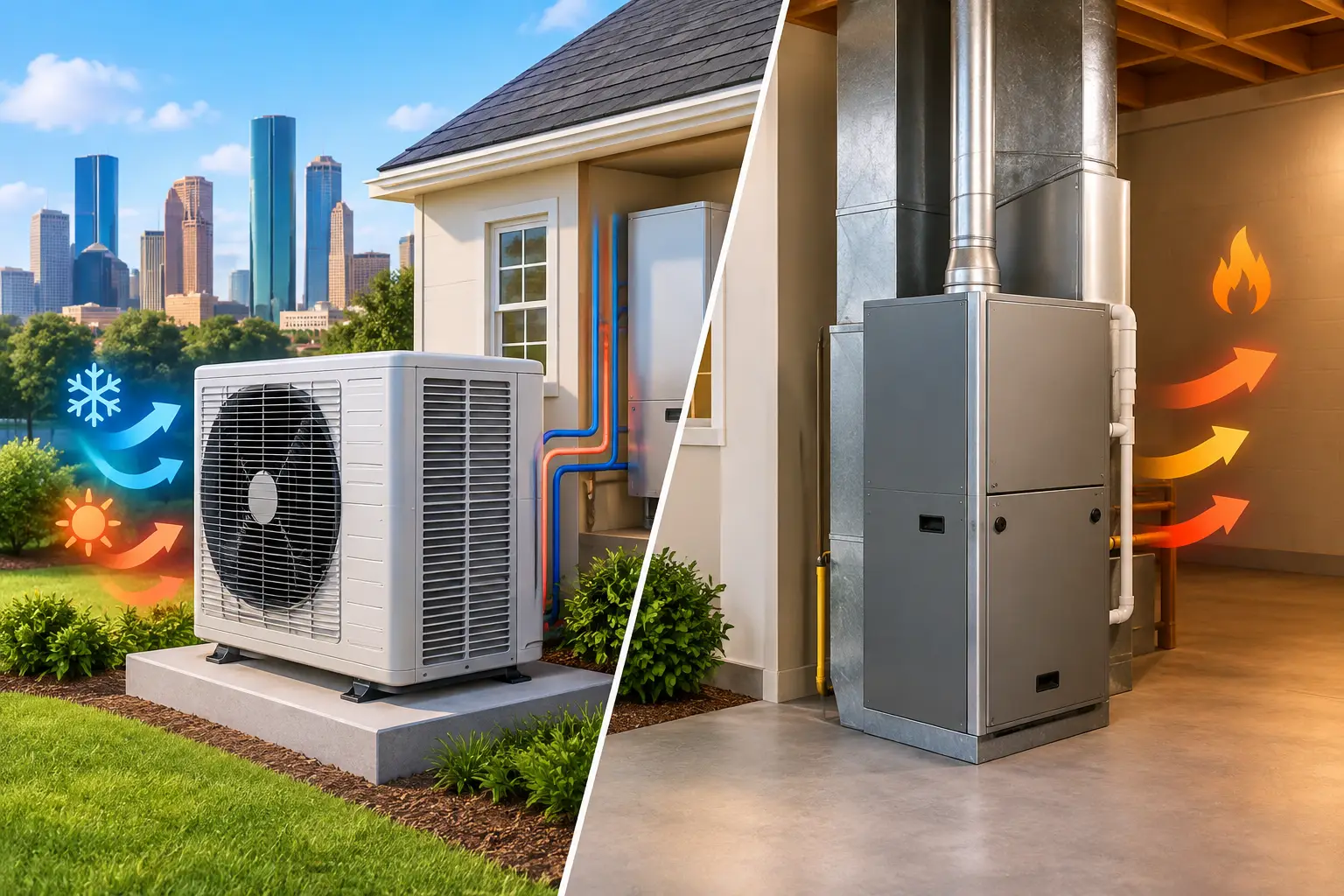
A furnace creates heat. A gas furnace burns fuel, while an electric furnace uses electric resistance coils. Either way, it generates warmth and distributes it through your ductwork.
A heat pump moves heat rather than creating it. In cooling mode, it works much like a central air conditioner, moving heat from indoors to outdoors. In heating mode, it reverses that process and pulls available heat from outdoor air into the building. Even when it feels cold outside, there is usually usable heat in Houston’s winter air.
That difference matters because moving heat generally requires less electricity than producing it with electric resistance heat. A heat pump also provides both heating and air conditioning in one primary system. Since Houston buildings run air conditioning far more often than heat, that year-round role deserves as much attention as winter performance.
Why Houston’s Climate Often Favors Heat Pumps
Houston has a long cooling season, high humidity, and comparatively short stretches of freezing weather. Modern heat pumps are well suited to those conditions. They deliver efficient heating during the mild temperatures that make up much of a typical local winter, then operate as your high-efficiency air conditioner through spring, summer, and fall.
A properly selected heat pump can also provide steadier comfort. Instead of short, very hot blasts of air followed by temperature drops, many variable-speed systems run at lower capacity for longer periods. That can reduce temperature swings, lower noise, and help the system better match changing weather.
Humidity needs a clear distinction here. Air conditioning removes moisture during cooling operation, but heating does not dehumidify the way cooling does. If your home feels sticky or develops moisture concerns during much of the year, system sizing, duct condition, ventilation, and possibly a whole-home dehumidifier should be considered as part of the plan. Replacing a heater alone will not solve every comfort issue.
When a Furnace Can Be the Better Choice
A gas furnace can deliver very warm supply air quickly, which some homeowners prefer during a hard cold snap. If your home already has natural gas service and a compatible furnace, replacement may also be a straightforward path. In a dual-fuel setup, a heat pump handles most heating days and a gas furnace takes over when outdoor temperatures fall below a selected point.
That combination can be practical for homeowners who want electric heat-pump efficiency in mild weather with gas heat available for colder conditions. It is not automatically the lowest-cost answer, however. The value depends on local electricity and gas rates, the efficiency of the equipment, your insulation and ductwork, and how often the furnace actually runs.
Electric furnaces deserve extra scrutiny in Houston. They may cost less to install in some cases, but electric resistance heat is typically more expensive to operate than a heat pump. If you are considering electric heat because gas is unavailable, ask whether a heat pump or ductless heat pump system can serve the space instead.
Compare Upfront Cost With the Cost of Ownership
Equipment price is only one line on the proposal. A meaningful comparison should include installation requirements, expected energy use, maintenance needs, available rebates, warranty coverage, and the remaining life of related equipment.
A heat pump replacement can be cost-effective when it replaces both an aging air conditioner and heating system. If your central AC is nearing the end of its service life, installing a furnace while leaving an older condenser outside may delay a larger decision rather than solve it. A matched heat-pump system lets the indoor and outdoor components operate as designed together.
A furnace may carry a lower initial price in a like-for-like replacement, particularly if the AC equipment is still in good condition. But lower upfront cost is not always lower lifetime cost. Houston’s extended cooling season gives high-efficiency heat pumps more opportunities to reduce electricity use compared with older AC equipment.
Rebates and financing can change the calculation, too. Qualifying efficiency upgrades may be eligible for utility rebates, and a contractor can help identify applicable options before equipment is selected. Ask for clear numbers rather than relying on a broad savings promise. Your projected operating cost should account for your actual building, not a generic estimate.
Installation Quality Has a Major Impact
The highest-rated equipment cannot compensate for poor sizing or rushed installation. An oversized system can cycle too frequently, reduce humidity control in cooling season, and create uneven temperatures. An undersized system may struggle during weather extremes and operate longer than necessary.
A professional assessment should review your building’s square footage, insulation, windows, orientation, ductwork, occupancy, and room-by-room comfort needs. For a commercial property, the review should also account for operating hours, kitchen equipment, ventilation loads, customer traffic, and areas with different schedules or heat loads.
Duct condition is especially important. Leaks, poor insulation, restrictive returns, and unbalanced airflow can waste conditioned air and make a new system seem underpowered. In some homes, zoning or ductless equipment is a smarter solution than forcing one central system to solve every hot or cold room.
For larger commercial facilities, variable refrigerant flow systems can provide individual zone control and efficient part-load operation. They are not necessary for every building, but they can be an excellent fit for offices, retail spaces, mixed-use properties, and projects where different areas need different temperatures throughout the day.
What to Ask Before Choosing a System
A replacement recommendation should be easy to understand. Before approving a heat pump or furnace, ask how the equipment was sized, whether your ducts were evaluated, and what temperatures the proposed heat pump is designed to handle. If backup heat is included, ask when it will operate and how that affects energy use.
Also ask whether the quoted system includes a variable-speed air handler or furnace blower, a compatible thermostat, new refrigerant-line work when needed, and permits. These details affect comfort and reliability. So do maintenance requirements. Both heat pumps and furnaces benefit from seasonal service, clean filters, and prompt attention to unusual noises, weak airflow, or rising utility bills.
For a business, the conversation should include installation timing and operational disruption. A restaurant cannot treat ventilation, cooling, and kitchen heat as separate comfort issues. A property manager may need phased work, dependable scheduling, and equipment that can be maintained without interrupting tenants. The right HVAC design respects those realities.
A Practical Choice for Your Property
Choose a heat pump when you want one efficient system for Houston’s dominant cooling load and mild winter heating, particularly if you are replacing both heating and AC equipment. Consider a furnace when existing gas infrastructure, very specific heating preferences, or a dual-fuel strategy makes it the better fit. Neither answer should be based on square footage alone or on the lowest bid.
Koolpro approaches replacements as a comfort and operating-cost decision, not a box swap. A careful evaluation can identify whether a high-efficiency heat pump, furnace, dual-fuel system, ductless unit, or zoned design best supports the way your home or business actually operates. The most dependable system is the one that is correctly designed, professionally installed, and maintained before the next weather change asks it to perform.