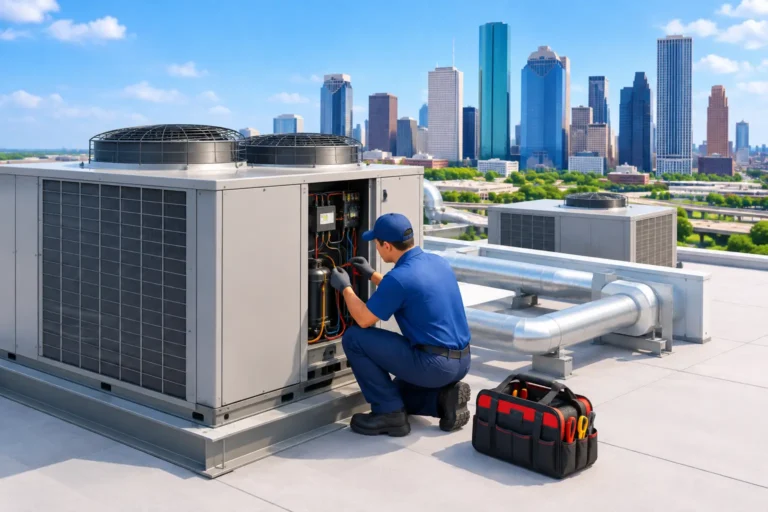
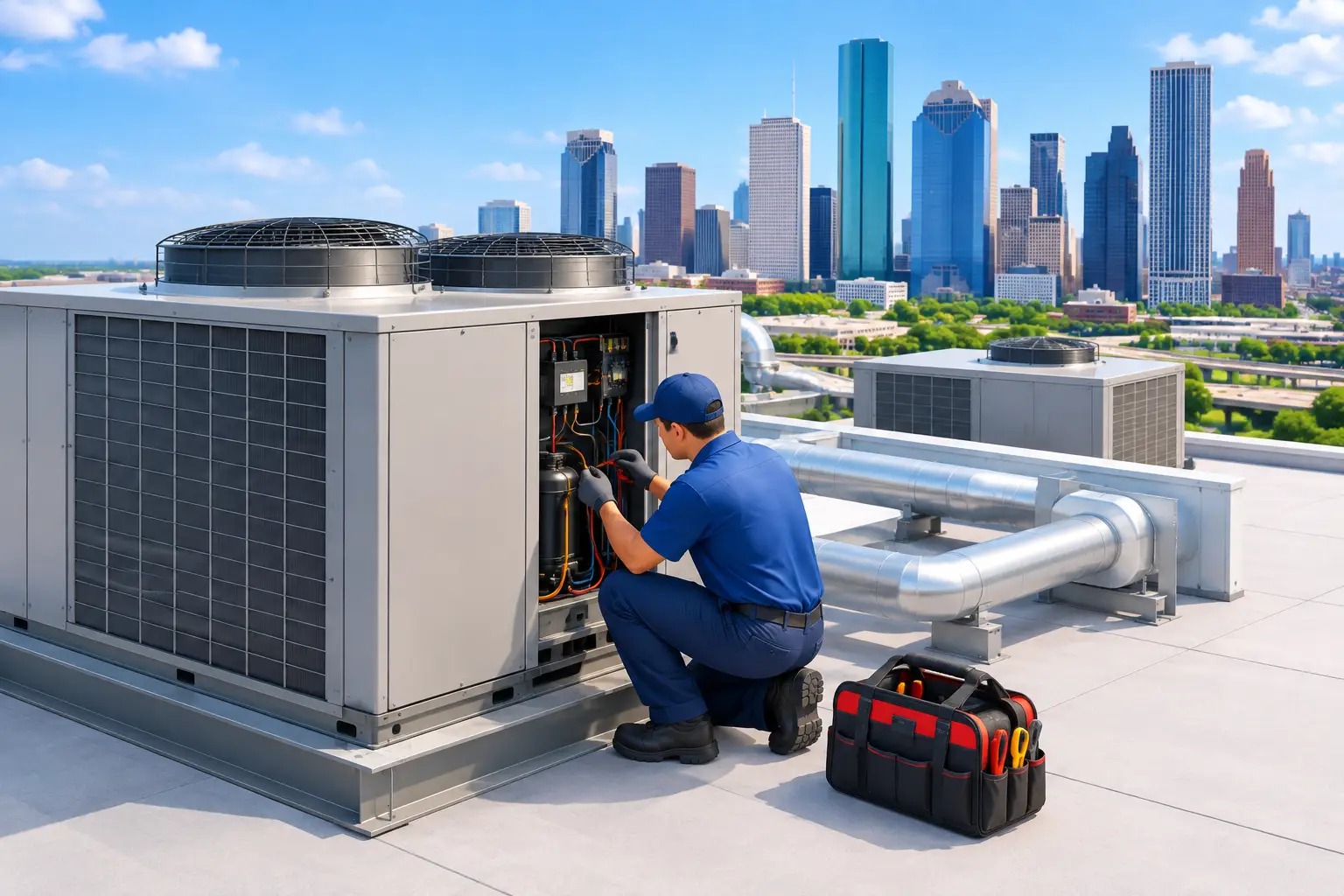
A rooftop unit that fails during a Houston lunch rush does more than make a dining room warm. It can send customers out the door, strain kitchen staff, threaten food-storage conditions, and turn a routine workday into an expensive disruption. This commercial HVAC maintenance guide helps Houston business owners and property managers protect comfort, equipment life, and operating budgets before small issues become urgent calls.
Commercial HVAC maintenance is not simply changing filters on a schedule. A well-run plan accounts for your building use, occupancy, ventilation needs, hours of operation, equipment age, and Houston’s long cooling season. A restaurant kitchen, medical office, retail store, warehouse, and multi-tenant office building may all need air conditioning, but they do not place the same demands on their systems.
Why Houston Commercial HVAC Needs a Planned Approach
Houston heat and humidity create a difficult operating environment for commercial equipment. Air conditioners may run for long stretches, moisture loads stay high, and outdoor coils collect dirt, debris, and pollen. In kitchens and high-traffic facilities, grease, dust, odors, and frequent door openings add another layer of stress.
When maintenance is delayed, the results are often gradual at first: longer run times, uneven temperatures, rising utility bills, and rooms that feel damp even when the thermostat is set correctly. Left alone, those symptoms can lead to frozen evaporator coils, compressor strain, drainage failures, poor indoor air quality, and avoidable downtime.
A planned maintenance program gives facilities teams visibility. Instead of reacting to a failure, you can identify worn components, airflow restrictions, refrigerant concerns, and control problems while there is time to schedule repairs around business operations.
Build Your Commercial HVAC Maintenance Schedule
The right frequency depends on equipment type and site conditions. Many Houston commercial properties benefit from professional maintenance at least twice a year: once before sustained cooling demand and once before the heating season. High-use sites, restaurants, medical spaces, and facilities with critical temperature requirements may need quarterly visits or more frequent filter and ventilation service.
Monthly and Ongoing Tasks for On-Site Teams
Your staff does not need to perform technical HVAC repairs, but a simple observation routine can catch problems early. Designate someone to note unusual sounds, water near equipment, thermostat complaints, hot or cold areas, odors, and changes in utility use.
Filters should be inspected regularly and replaced based on condition, not just the date on a calendar. A clogged filter restricts airflow, raises fan energy use, and can contribute to coil icing or comfort complaints. In dusty spaces, warehouses, salons, restaurants, and facilities near construction, filters may need attention much more often than a typical office.
Keep outdoor units and rooftop equipment areas clear of loose debris. Do not stack materials around condensers, block service access, or allow landscaping to restrict airflow. If your system serves a kitchen, make sure HVAC maintenance is coordinated with hood, make-up air, and exhaust service so one airflow change does not create a new comfort or pressure problem elsewhere.
Seasonal Service Before Peak Cooling
Before Houston’s hottest months arrive, a licensed commercial HVAC technician should inspect the system under operating conditions. This visit should include electrical testing, thermostat and control verification, refrigerant performance checks, condensate drainage inspection, coil condition, blower operation, and airflow evaluation.
Technicians should also inspect belts, bearings, contactors, capacitors, disconnects, and other components that commonly wear with heavy use. The goal is not to replace parts unnecessarily. It is to identify measurable wear and explain which repairs should be handled now, monitored, or budgeted for later.
For buildings with multiple zones, VRF systems, or sophisticated controls, maintenance should include reviewing communication faults, zone performance, and control sequences. A single poorly performing zone can affect comfort across a larger area and cause the system to run harder than necessary.
Heating Season and Ventilation Checks
Houston businesses still need dependable heat during cold snaps. A fall visit should confirm safe heating operation, inspect heat exchangers where applicable, test ignition and safety controls, and verify that combustion equipment is venting correctly.
Ventilation deserves equal attention. Outside-air dampers, exhaust systems, make-up air units, and dedicated outdoor air systems help manage moisture, odors, and fresh-air requirements. If they are out of balance, your building may feel humid, stuffy, excessively cold near entryways, or difficult to cool even when the main AC equipment appears to be working.
What a Professional Commercial HVAC Visit Should Cover
A useful service visit produces more than a checklist with boxes marked complete. It should leave you with a clear understanding of system condition, immediate concerns, and practical next steps.
A thorough commercial visit generally includes these core areas:
- Airflow and filtration checks, including blower performance, filters, ducts, supply registers, and return-air pathways.
- Electrical and mechanical inspection, including motors, belts, wiring, capacitors, contactors, vibration, and safety components.
- Cooling and drainage testing, including coil condition, refrigerant readings where appropriate, compressor operation, and condensate drain performance.
- Controls and comfort review, including thermostats, scheduling, zoning, humidity concerns, equipment alarms, and tenant or staff complaints.
The scope will vary by system. A packaged rooftop unit needs different attention than a ductless multi-zone system or a commercial VRF installation. The right contractor should explain those differences in plain language and tailor recommendations to how your building actually operates.
Watch for These Signs Between Service Visits
Do not wait for a complete shutdown to call for help. A commercial HVAC system often provides warning signs before a major failure, especially during peak cooling season.
Pay attention if employees or tenants report recurring hot and cold spots, humidity that will not improve, rattling or grinding noises, musty odors, frequent thermostat adjustments, or water stains around ceiling equipment. Rising energy bills without a clear change in occupancy or operating hours also deserve investigation.
Short cycling is another concern. When equipment turns on and off repeatedly, it may be responding to a control issue, airflow restriction, oversized equipment, refrigerant problem, or another fault. The cause matters. Replacing a part without diagnosing the operating condition can lead to repeat service calls and higher costs.
Reduce Costs Without Cutting Necessary Maintenance
When budgets are tight, maintenance can look like an easy expense to postpone. In practice, deferring service often shifts costs into emergency repairs, lost business hours, damaged inventory, and premature equipment replacement.
That does not mean every older system needs to be replaced. If a repair is isolated, the equipment is performing efficiently, and parts remain available, repair may be the practical choice. If repair needs are becoming frequent, energy use is climbing, comfort complaints persist, or obsolete equipment is creating risk, it may be time to compare repair costs against replacement or a staged upgrade.
High-efficiency equipment, zoning improvements, ductless systems, and VRF solutions can reduce operating costs in the right application, particularly where different areas have different schedules or comfort needs. However, savings depend on proper design, installation, controls, and maintenance. Efficiency ratings alone do not solve airflow, humidity, or ventilation problems.
Ask your contractor to document recommendations by priority: items affecting safety or operation, repairs that prevent likely downtime, and longer-term improvements that can be planned into your capital budget. That approach supports better decisions than a one-size-fits-all replacement recommendation.
Keep Records That Help You Make Better Decisions
Maintenance records are valuable when they are easy to use. Keep equipment model and serial numbers, service dates, repairs, filter sizes, warranty information, refrigerant-related work, and recurring comfort complaints in one location. For multi-site businesses or larger properties, track service history by unit and zone.
These records reveal patterns. If the same unit repeatedly loses cooling capacity, trips electrical components, or generates drainage issues, you can move from repeated symptom-based repairs to a more informed equipment decision. Records also make it easier to plan work during low-impact hours rather than waiting for an emergency.
Koolpro helps commercial customers build maintenance plans around their equipment, facility demands, and operating schedule, with licensed technicians who can address standard rooftop equipment as well as complex multi-zone and VRF applications.
A dependable HVAC plan should make your building easier to run, not harder to manage. Start with the equipment that affects your people, customers, and operations most, then build a service schedule that gives you fewer surprises when Houston weather puts every system to work.