
A failed air conditioner in a Houston summer rarely arrives at a convenient time. For a homeowner, it can turn a comfortable house into a hot, humid problem overnight. For a business, lost cooling can affect employees, customers, inventory, and daily operations. This HVAC financing guide explains how to evaluate payment options without losing sight of the system quality, installation workmanship, and long-term operating costs that matter most.
Financing can make a necessary HVAC replacement or efficiency upgrade more manageable. It should not force you into a quick decision on equipment that is undersized, poorly installed, or unable to control Houston humidity. The right approach is to match the payment structure to a properly designed comfort solution.
Start With the Full Cost of Comfort
The purchase price is only one part of an HVAC investment. A complete estimate should account for the equipment, labor, permits when required, electrical or ductwork modifications, thermostat controls, drainage, startup, and commissioning. If a proposal is dramatically lower than others, ask what has been left out.
A new high-efficiency air conditioner, heat pump, ductless system, zoning upgrade, or commercial VRF installation can reduce energy waste and improve comfort, but results depend on design and installation. The lowest monthly payment is not always the lowest overall cost. A longer term may lower the monthly amount while increasing total interest paid. A low upfront price may also become expensive if the system has frequent repairs, poor airflow, or high utility use.
For Houston properties, humidity control deserves special attention. Proper system sizing, ventilation, filtration, duct condition, and dehumidification can affect how cool a space feels. A system that runs but leaves rooms clammy is not delivering the comfort you are financing.
HVAC Financing Guide: Know Your Main Options
Most customers use one of several paths to pay for a major HVAC project. The best fit depends on your budget, the urgency of the work, the age of the property, and whether you are financing a home improvement or a business asset.
Contractor-arranged financing
Many HVAC contractors offer access to financing through third-party lending partners. This can be convenient because the application process is connected to the estimate and installation schedule. Depending on the program and applicant qualifications, there may be promotional terms, fixed monthly payments, or longer repayment periods.
Read the agreement carefully before signing. Confirm the annual percentage rate, promotional period, monthly payment, deferred-interest language, late-payment terms, and whether prepayment penalties apply. A promotional offer can be useful, but deferred interest may be charged if the balance is not paid within the required period. Ask for the full repayment picture, not only the advertised monthly payment.
Personal loans and home equity options
A bank or credit union personal loan may provide a fixed payment and a clear payoff schedule. This option can be worth comparing when you have strong credit or want to separate the financing from the HVAC contractor.
Home equity loans or lines of credit may offer different rates or longer repayment terms, but they use your home as collateral and may involve more time and fees. They tend to make more sense for larger projects, such as a full system replacement paired with duct upgrades, zoning, insulation improvements, or indoor air quality work. They may be less practical when an AC failure requires immediate action.
Credit cards and cash savings
Using savings avoids interest, provided it does not leave you without an emergency reserve. Credit cards can be useful for a smaller repair or a short repayment period, especially with a true introductory rate. For a full HVAC replacement, standard card interest rates can become costly quickly if the balance carries over.
Commercial equipment financing
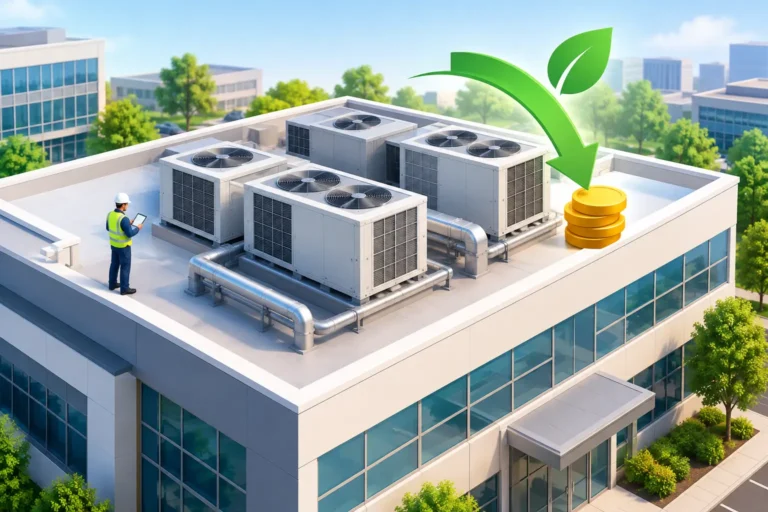
Businesses, restaurants, property managers, and facilities teams often need financing structured around cash flow and equipment life. Commercial financing may be used for rooftop units, kitchen ventilation, dedicated outdoor air systems, multi-zone ductless systems, or VRF equipment. Some arrangements are loans, while others are leases or equipment finance agreements.
Commercial decision-makers should compare more than monthly payments. Consider the term length, ownership at the end of the agreement, tax treatment with your financial advisor, maintenance requirements, insurance obligations, and whether the equipment supports planned tenant improvements or business growth. A restaurant, for example, may prioritize fast installation and dependable ventilation as much as the financing rate because downtime has its own cost.
Compare Payments Against Energy and Repair Costs
An HVAC system should be evaluated over years, not only at installation. A higher-efficiency system may cost more upfront but can reduce cooling costs, particularly when it is correctly sized and paired with sound ductwork and controls. A heat pump may also provide efficient heating during Houston’s milder winter stretches.
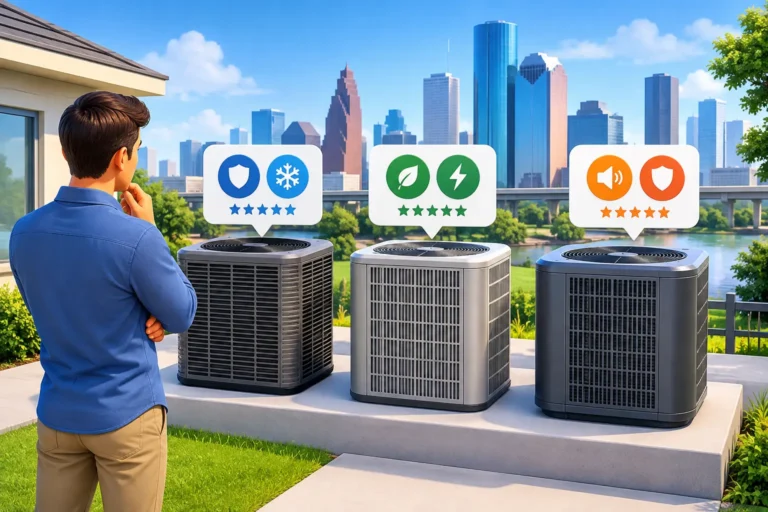
Start by looking at what the current system is costing you. Review recent electricity bills, repair invoices, comfort complaints, and how often the equipment cycles or stops working. Then ask for a side-by-side comparison of practical equipment options. The goal is not always to select the highest-rated model. It is to select a system that fits the building, usage pattern, budget, and comfort expectations.
For commercial properties, include operational impact in the calculation. A reliable multi-zone system can give separate areas more precise temperature control. That can prevent a conference room, dining area, server room, or tenant suite from being conditioned like every other space. Better control can support comfort while avoiding unnecessary runtime.
Factor in Rebates, Tax Credits, and Warranty Coverage
Available incentives can reduce the net cost of qualifying efficiency upgrades. Utility rebates may be available for eligible equipment and can be substantial, with opportunities of up to $2,105 in some cases. Eligibility, equipment specifications, program funding, and application requirements can change, so verify details before making a final decision.
Federal tax credits may also apply to certain qualifying residential energy improvements. A tax credit is not the same as an instant rebate, and personal tax situations vary. Keep invoices, model information, and supporting documentation, then speak with a qualified tax professional for advice specific to your situation.
Warranty protection has real value, particularly when financing a system over multiple years. Ask what the manufacturer covers, what labor coverage is included, whether registration is required, and what exclusions apply. Koolpro offers a stated 12-year parts-and-labor warranty on installed systems, giving eligible customers added protection beyond the installation date.
Questions to Ask Before You Apply
Before choosing a financing option, make sure the HVAC recommendation itself is sound. A dependable contractor should be able to explain why a specific capacity, system type, or efficiency level fits your property. For a replacement, that conversation should include more than the size of the old unit. Building changes, insulation, window exposure, duct condition, occupancy, and humidity needs can all affect the recommendation.
Ask whether the estimate includes removal of existing equipment, permits, duct repairs, electrical work, thermostat upgrades, condensate drainage, and startup testing. For commercial projects, ask about scheduling, safety planning, crane coordination if needed, tenant communication, and how disruption will be minimized.
You should also request clarity on the financing terms before work begins. Know the amount financed, payment due date, total payments, rate, payoff timeline, and any conditions tied to a promotional offer. If the numbers are unclear, pause and ask. Financing should create confidence, not pressure.
Choose the Payment Plan That Protects Your Priorities
A good HVAC financing decision leaves room for the things that protect your investment: qualified installation, appropriate equipment, preventive maintenance, and timely repairs. Stretching a budget to buy more capacity or features than the property needs is rarely wise. Cutting essential installation work to reach a lower payment can be just as costly.
If cooling is unreliable, rooms are uneven, humidity is persistent, or repairs are beginning to add up, request a detailed evaluation before the next emergency. A clear estimate and transparent financing conversation can turn an unexpected HVAC expense into a planned improvement that supports comfort, efficiency, and dependable operation for years to come.