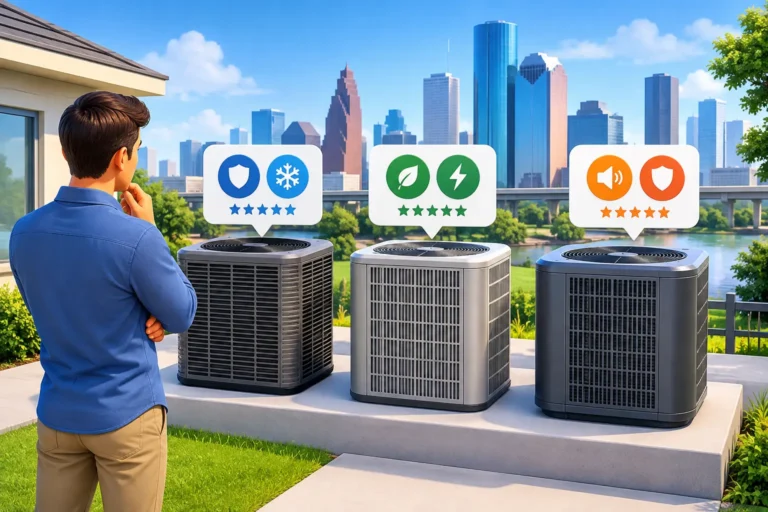
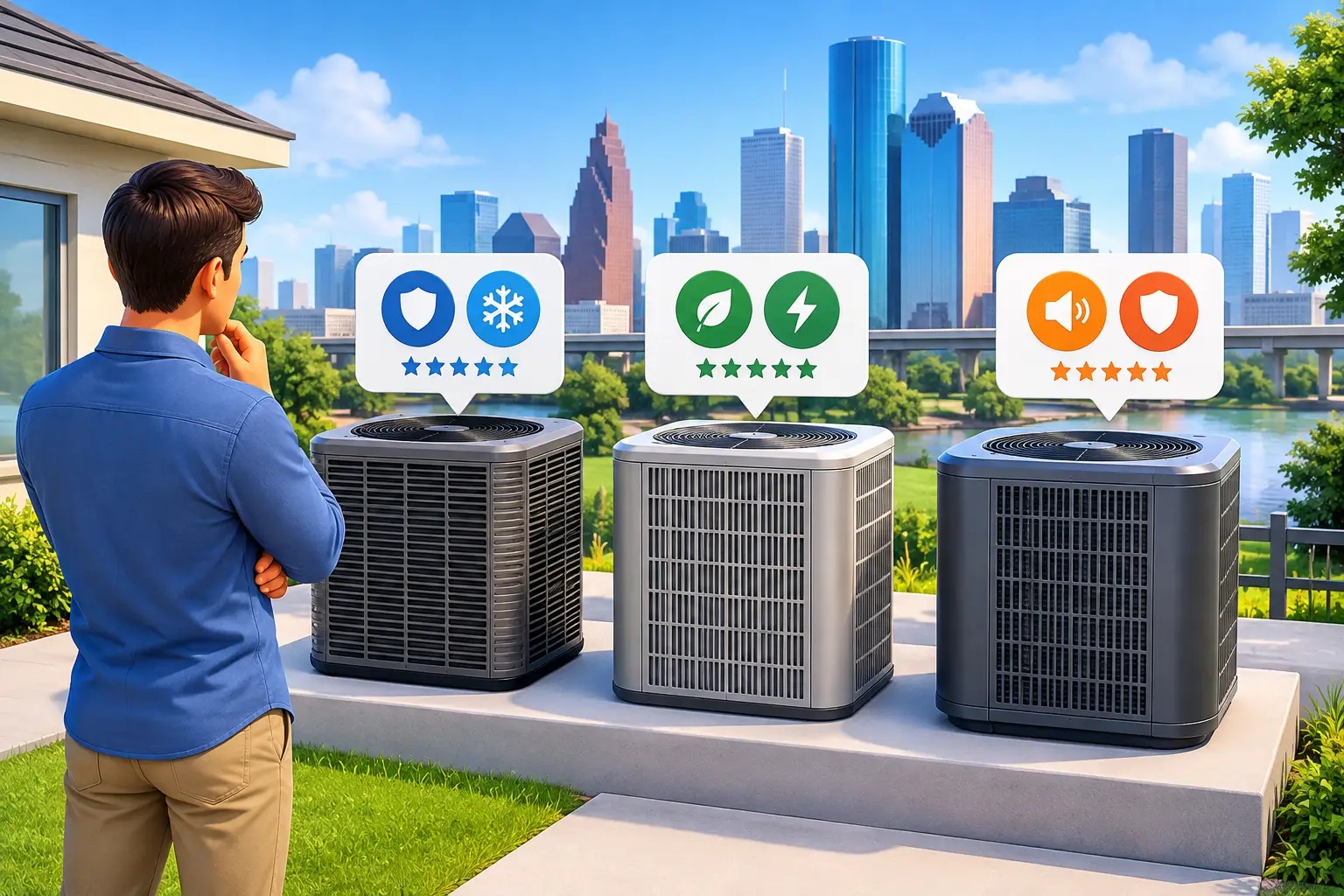
A new air conditioner may carry a familiar name, but the logo on the outdoor unit is only one part of the decision. For Houston property owners, the best AC brands are the ones that can handle extreme summer heat, long cooling seasons, high humidity, and the real layout of your home or building. A dependable system starts with capable equipment, then depends on correct sizing, thoughtful design, and professional installation.
The right choice is rarely as simple as asking which manufacturer is “best.” One brand may be a strong fit for a straightforward single-family replacement, while another may offer better options for zoning, ductless comfort, or a multi-zone commercial project. The goal is to compare the system as a complete comfort solution, not just compare model names.
What to Compare Between AC Brands
Most established HVAC manufacturers offer equipment in several performance levels. Their entry-level systems may prioritize a manageable upfront cost, while premium lines can offer higher efficiency, quieter operation, communicating controls, variable-speed technology, and stronger humidity management.
That means comparing brands without comparing specific equipment can be misleading. A mid-tier variable-speed system from one manufacturer may be a better match for your building than a top-tier single-stage system from another. Start with the performance features that affect daily comfort and operating cost.
Efficiency ratings and real operating costs
SEER2 is the current efficiency rating used for residential air conditioners and heat pumps. A higher SEER2 rating generally means the system uses less electricity to produce the same amount of cooling. In Houston, where AC runs for much of the year, that difference can be meaningful over the life of the equipment.
Still, the highest rating is not automatically the smartest purchase. Higher-efficiency equipment typically costs more, and savings depend on your electricity use, thermostat habits, insulation, duct condition, and system sizing. A properly installed mid-efficiency system can outperform a premium unit that is oversized, poorly commissioned, or connected to leaking ductwork.
For commercial properties, the conversation may involve efficiency at part load, equipment staging, zoning, and the ability to serve changing occupancy patterns. Restaurants, offices, retail spaces, and mixed-use properties often need more than a standard rooftop unit comparison.
Humidity control matters in Houston
Cooling and dehumidification work together, but they are not the same thing. A system that cools a room quickly and shuts off may leave humidity behind. That can make a home feel clammy even at a lower thermostat setting and can create discomfort in offices, bedrooms, and customer-facing spaces.
Many higher-end AC brands offer variable-speed air handlers, inverter-driven outdoor units, or enhanced dehumidification modes. These features can run longer at lower output, removing more moisture while avoiding large temperature swings. They are especially useful in Houston homes with uneven comfort, moisture concerns, or rooms that never seem to feel quite right.
If humidity is a major concern, ask about the full indoor system. Coil selection, blower settings, drainage, return-air design, and a whole-home dehumidifier can matter as much as the outdoor condenser.
Sound, controls, and service access
Noise levels vary by model, not simply by manufacturer. If the outdoor unit will sit near a bedroom, patio, neighbor’s property line, or restaurant seating area, compare published sound ratings and discuss placement before installation begins.
Smart thermostats and communicating controls can offer scheduling, diagnostics, and better system coordination. They can be useful, but they may also require brand-specific components. For some property owners, a reliable conventional thermostat and a simpler equipment design are the right choice. For others, advanced controls and remote monitoring bring real value.
Serviceability also deserves attention. A quality contractor can service major equipment brands, but parts availability, local distributor support, and the complexity of the system can affect future repair timing. This is one reason to choose equipment that has solid local support and an installer prepared to stand behind the work.
Popular AC Brands and Where They Tend to Fit
Carrier, Trane, American Standard, Lennox, Rheem, Ruud, Daikin, and Mitsubishi Electric are among the names Houston buyers often consider. Each has a broad product range, and each can be a good choice when the equipment is matched to the project.
Carrier and Trane are commonly considered by buyers looking for established residential and light-commercial equipment lines with options across several efficiency levels. American Standard shares engineering heritage with Trane and is often evaluated alongside it. Lennox is known for premium efficiency options and advanced controls, though model selection and local support should be part of the conversation.
Rheem and Ruud offer equipment that can be a practical fit for homeowners looking for dependable cooling and a balanced upfront investment. As with any brand, specific model features, warranty terms, and installation quality should guide the decision rather than a general reputation alone.
Daikin and Mitsubishi Electric are especially relevant when ductless or variable refrigerant flow systems are under consideration. Ductless mini-splits can solve comfort problems in additions, garages, server rooms, older homes, and spaces without practical duct access. VRF systems can provide independent comfort control across many zones, making them valuable for offices, retail, hospitality, and other commercial properties with varied loads.
No manufacturer wins every category for every project. The best equipment line depends on whether you need a traditional split system, heat pump, ductless solution, rooftop equipment, or a more advanced multi-zone design.
Installation Quality Can Matter More Than the Badge
An air conditioner is not a plug-and-play appliance. Even excellent equipment can deliver disappointing comfort if it is installed without proper planning.
The first step should be a load calculation that considers square footage, window exposure, insulation, ceiling height, occupancy, appliances, and the local climate. Replacing a system with the same tonnage simply because it was there before can repeat an old sizing mistake. Oversized equipment may short-cycle, provide weaker dehumidification, and wear components unnecessarily. Undersized equipment may struggle through peak afternoon heat.
Ductwork must also be evaluated. Leaks, restrictions, poor return-air paths, and uninsulated runs can waste capacity and create room-to-room temperature differences. A new condenser alone cannot correct a distribution problem. In some properties, zoning, duct modifications, or a ductless unit for a difficult area may provide a better result than installing a larger central system.
Proper refrigerant charging, electrical work, condensate drainage, airflow setup, and startup testing are equally important. A licensed contractor should explain what will be inspected, what equipment is recommended, and why it fits your space. That clear process is more valuable than a quick quote based only on the old unit’s label.
Warranty Questions to Ask Before Choosing
Manufacturer warranties vary by brand, model, registration requirements, and whether the system is installed in a residence or commercial property. A long parts warranty can be helpful, but it does not always include labor, refrigerant, diagnostic time, or related installation corrections.
Before approving a proposal, ask what is covered, what registration is required, and who handles warranty service if an issue occurs. Also ask about the contractor’s labor warranty. That is where workmanship accountability becomes clear.
For larger investments, look beyond the warranty headline. Consider the expected operating cost, projected repair needs, available utility rebates, financing options, and the level of support available after installation. A lower initial price may not remain the lower-cost option if it sacrifices comfort, efficiency, or dependable service.
Choosing Equipment for Commercial Buildings
Commercial buyers need to account for more than cooling capacity. Ventilation requirements, kitchen heat, exhaust systems, tenant schedules, server loads, occupancy changes, and access for service all influence the best equipment choice.
A restaurant may need makeup air coordination and equipment that can withstand demanding kitchen conditions. An office with private rooms may benefit from zoning or VRF rather than one system trying to satisfy every space. Property managers may prioritize standardized equipment, service response, and lifecycle planning across multiple units.
For these projects, brand selection should follow a site assessment and system design. The right proposal identifies operational needs, not just equipment capacity. Koolpro helps Houston homeowners and commercial decision-makers evaluate those trade-offs with customized recommendations built around comfort, efficiency, and long-term reliability.
When comparing AC brands, ask which system will control humidity, fit the building, remain serviceable locally, and perform efficiently under Houston conditions. The most valuable answer is not a logo. It is a well-designed system that keeps the people inside comfortable when the heat outside is at its worst.