A Houston cooling system works hard for most of the year, then may need to heat your home during a sudden January cold snap. That is why the heat pump versus AC decision is more than a question of which unit sits outside. The right choice affects summer comfort, indoor humidity, winter utility bills, installation scope, and how reliably your home performs over the long term.
For many Houston homeowners, a heat pump is an excellent all-electric replacement option. A conventional central AC system can also be the right answer, especially when it is paired with an efficient gas furnace. The better fit depends on your home, your existing equipment, your energy priorities, and the quality of the system design.
Heat Pump Versus AC: The Basic Difference
Both systems use refrigeration to pull heat out of your home and move it outdoors during cooling season. In practical terms, both can deliver the cold air Houston homeowners expect when properly sized, installed, and maintained.
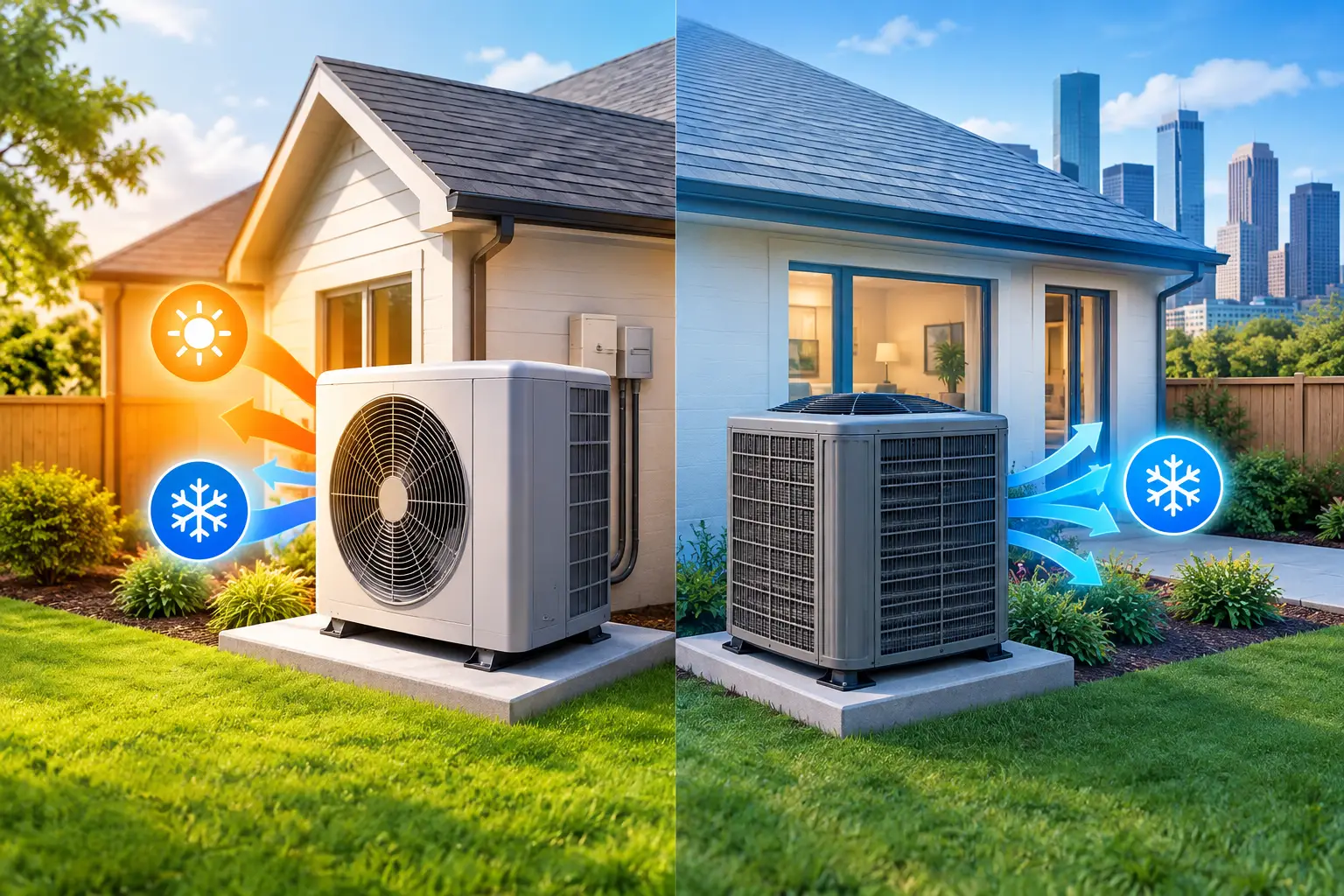
The difference is what happens in heating mode. A central air conditioner only cools, so it needs a separate furnace or another heat source for winter. A heat pump can reverse its refrigeration cycle. Instead of removing heat from inside, it gathers available outdoor heat and moves it indoors.
That may sound surprising when the weather is chilly, but a heat pump can pull usable heat from outdoor air well below Houston’s typical winter temperatures. On the coldest days, most heat-pump systems use auxiliary electric heat, while some homes keep a furnace as a dual-fuel backup. This gives homeowners one outdoor system that handles both cooling and heating.
Why Heat Pumps Make Sense in Houston
Houston’s climate gives heat pumps a real advantage. Winters are generally mild, so a heat pump can operate efficiently for much of the heating season. Rather than creating heat by burning fuel or running electric resistance strips, it transfers heat. That process can reduce heating energy use compared with electric resistance heating.
A heat pump also simplifies an all-electric home. If your furnace is aging, you do not have natural gas service, or you want to reduce reliance on gas appliances, a heat pump can replace both the cooling equipment and primary heating source. Modern variable-speed models can also run at lower output for longer periods, helping maintain steadier indoor temperatures.
For homes with rooms that never seem to cool evenly, equipment selection is only part of the answer. Heat pumps are available in central ducted, ductless mini-split, and multi-zone configurations. A ductless or zoned design can be particularly useful for garage conversions, additions, upstairs bedrooms, or spaces where extending ductwork would be difficult.
The cold-snap consideration
Houston does experience occasional freezing weather. During these events, a heat pump may need auxiliary heat and will periodically enter a defrost cycle to clear frost from the outdoor coil. That is normal operation, but it is worth discussing before installation.
If your home already has a reliable gas furnace and you prefer gas heat during colder weather, a dual-fuel setup may be worth considering. The system can use the heat pump during milder conditions and switch to the furnace when outdoor temperatures drop below a chosen point. The best setting depends on utility rates, equipment efficiency, and comfort preferences.
When a Conventional AC and Furnace Is the Better Fit
A high-efficiency central AC system paired with a gas furnace remains a dependable choice for Houston homes. If your furnace is newer, in good condition, and correctly sized, replacing only the outdoor AC unit and indoor coil may be the most practical path. It can lower upfront costs compared with replacing the full heating and cooling system at once.
Some homeowners also prefer the feel and rapid output of gas heat during a cold front. Gas furnaces can provide strong heating capacity regardless of outdoor temperature, and they avoid relying on electric heat strips when conditions turn unusually cold.
The trade-off is that you are maintaining two distinct heating and cooling functions. A furnace requires fuel supply, venting, combustion safety checks, and regular maintenance in addition to AC service. It may still be the right long-term value, but the decision should account for the full condition of your equipment, not just the cost of the outdoor unit.
Cooling Performance Depends on Design, Not the Label
A common misconception is that an air conditioner cools better than a heat pump. In cooling mode, a properly selected heat pump uses the same core refrigeration principles as a central AC system. Either option can cool effectively in Houston’s heat and humidity.
What matters most is correct sizing, airflow, duct condition, refrigerant charge, thermostat control, and installation workmanship. Oversizing is especially problematic in our climate. An oversized system may cool the air quickly but shut off before it has removed enough moisture. The home can feel clammy even when the thermostat reads the set temperature.
A careful load calculation should account for the home’s square footage, insulation, windows, ceiling height, orientation, occupancy, duct leakage, and problem rooms. Replacing equipment based only on the tonnage of the old system can repeat an existing comfort problem.
Humidity deserves its own conversation
Houston homeowners often focus on temperature because it is visible on the thermostat. Humidity is what determines whether 74 degrees feels crisp or sticky. Variable-speed and two-stage systems can help with moisture removal by operating longer at lower capacity, but they are not a cure-all for every home.
If your home has persistent humidity issues, the solution may include duct repairs, ventilation adjustments, a whole-home dehumidifier, or changes to thermostat settings. For larger homes and commercial spaces, zoning and dedicated outdoor-air strategies can also play a role. The equipment should be designed around the building, not selected from a one-size-fits-all menu.
Upfront Cost, Operating Cost, and Available Incentives
The installed price of a heat pump or central AC system varies widely based on capacity, efficiency rating, ductwork needs, electrical upgrades, indoor equipment, and controls. A heat pump may cost more upfront when it replaces both cooling and heating equipment, but it can also eliminate the need to purchase a separate furnace.
Operating cost is equally situational. A heat pump can be highly economical through a typical Houston winter, while an AC-and-gas-furnace combination may appeal where gas pricing and existing furnace condition favor that approach. High-efficiency equipment generally costs more than entry-level equipment, yet may provide lower utility use, quieter performance, and better temperature control over time.
Rebates and financing can change the math. Eligibility often depends on the specific equipment, efficiency levels, utility territory, and installation details. Before choosing based on a sticker price, ask for a side-by-side estimate that separates equipment cost, required improvements, expected maintenance needs, warranty coverage, and potential rebate opportunities.
What Commercial Property Owners Should Consider
For a small office, retail space, restaurant, or multi-tenant property, heat pump versus AC is rarely a simple equipment swap. Cooling load can be shaped by kitchen heat, customer traffic, operating hours, ventilation requirements, solar exposure, and equipment that runs year-round.
Heat-pump VRF systems can provide individual zone control and efficient part-load operation in the right application. Conventional split systems may be a better fit for straightforward spaces with simpler comfort needs. Restaurants often need a coordinated plan for kitchen exhaust, make-up air, dining-area comfort, and humidity control rather than an isolated replacement of one condensing unit.
Downtime matters, too. A qualified contractor should plan installation around occupancy, access, electrical requirements, code compliance, and the operational needs of the business.
Choose the System That Solves Your Actual Comfort Problem
The best decision starts with an in-home or on-site evaluation, not a guess based on square footage or a neighbor’s equipment. Ask whether your ducts can support the new system, whether electrical upgrades are needed, how humidity will be managed, and what backup heat strategy makes sense for your household.
Koolpro helps Houston homeowners and commercial property teams compare tailored options, including high-efficiency central systems, heat pumps, ductless equipment, zoning, and VRF solutions. A clear proposal should explain what is being installed, why it fits the building, and what to expect from the process.
Your next HVAC system should do more than turn on when the thermostat calls. Choose the setup that keeps your space comfortable through Houston’s long cooling season, handles winter weather with confidence, and gives you a practical path to lower operating costs over the years ahead.