Houston air conditioners work hard for much of the year. When refrigerant begins escaping from the system, the change may start subtly: longer cooling cycles, rooms that never quite feel comfortable, or humidity that seems harder to control. Knowing the top signs of a refrigerant leak can help you act before a minor repair turns into compressor damage, higher utility bills, or an unexpected system replacement.
Refrigerant is not a fuel that an AC system simply uses up. It circulates in a sealed loop, carrying heat from inside your home or business to the outdoors. If the level is low, there is usually a leak that needs to be located and repaired by a licensed HVAC professional.
Why a Refrigerant Leak Matters in Houston
A properly charged air-conditioning system removes both heat and moisture from indoor air. In Houston’s hot, humid climate, low refrigerant can affect more than the temperature on the thermostat. Your AC may struggle to dehumidify, leaving rooms cool enough but clammy and uncomfortable.
As the refrigerant charge drops, the system has to run longer to meet demand. That puts extra strain on the compressor, one of the most expensive components in an air conditioner, heat pump, ductless system, or commercial VRF system. Catching the issue early protects comfort, efficiency, and the equipment investment you rely on.
Top Signs of a Refrigerant Leak
No single symptom confirms a leak. Some issues can also be caused by dirty filters, airflow restrictions, electrical problems, or an aging system. Still, these warning signs deserve prompt attention, especially when more than one appears at the same time.
1. Your AC Runs Longer but Cools Less
A common sign is an air conditioner that runs for long stretches without bringing the indoor temperature down. You may notice the thermostat set at 72 degrees while the home remains at 76 or 78 degrees through the afternoon.
Low refrigerant reduces the system’s ability to absorb indoor heat. The blower may still be moving air, but that air will not feel as cool as it should. Before assuming refrigerant is the cause, check that the return filter is clean and that supply vents are open. If those basics are in order, a professional diagnostic visit is the right next step.
2. Air From the Vents Feels Warmer Than Normal
Cool airflow is not the same as strong airflow. A system with a refrigerant leak can blow plenty of air while delivering air that feels only mildly cool, particularly during peak afternoon heat.
Compare the air coming from several supply vents rather than relying on one room. Uneven cooling can point to ductwork or zoning concerns, while consistently undercooled air throughout the building may indicate a refrigeration-side problem. Accurate testing requires measuring temperatures, pressures, and system performance together.
3. Ice Forms on the Refrigerant Line or Indoor Coil
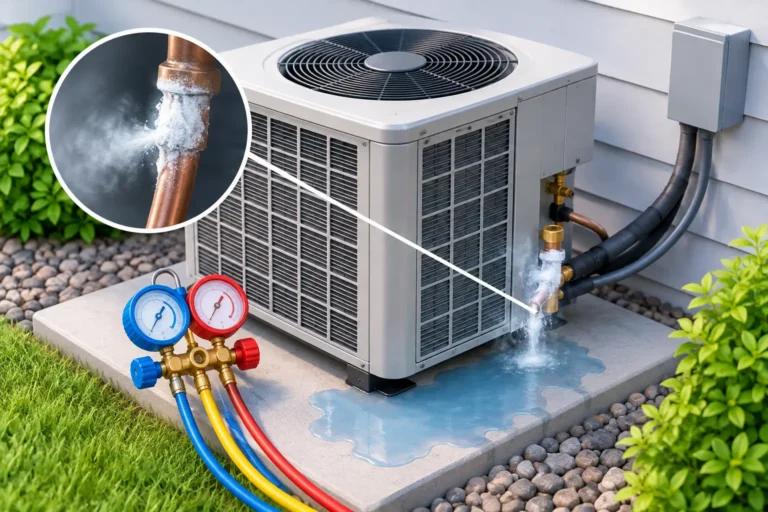
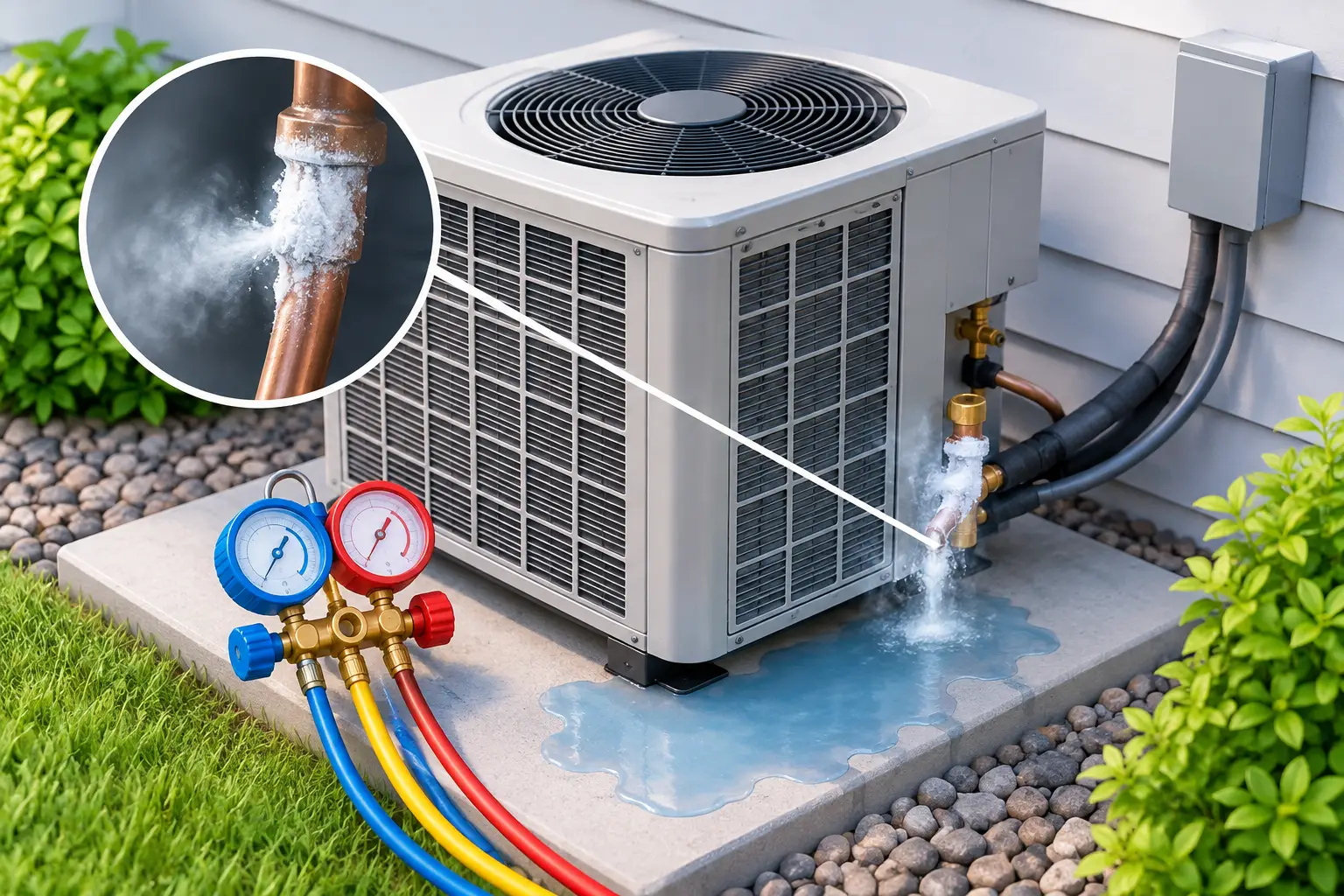
Frost or ice on the insulated copper line near the outdoor unit is a visible warning sign. You may also see ice on the indoor evaporator coil, although that component is usually out of sight.
Low refrigerant can make the coil too cold, allowing moisture in the air to freeze on its surface. Restricted airflow from a clogged filter, dirty coil, or blower issue can create similar icing, so this is not a DIY diagnosis. Turn the system off or switch it to fan-only mode if practical, then schedule service. Continuing to operate an iced system can lead to water damage when the ice melts and can worsen component stress.
4. Indoor Air Feels More Humid
If your home feels sticky even when the AC is running, the system may not be removing enough moisture. Refrigerant problems can reduce dehumidification because the indoor coil is no longer operating at the conditions required for efficient moisture removal.
Humidity control is especially important in Houston. Excess indoor humidity can make occupants lower the thermostat further, increasing energy use without solving the comfort issue. It can also contribute to musty odors and moisture concerns over time. In some properties, the right solution may include a refrigerant repair plus airflow adjustments, zoning improvements, or a dedicated whole-home dehumidifier.
5. You Hear Hissing or Bubbling Near HVAC Components
A small refrigerant leak can sometimes make a faint hissing sound as pressurized refrigerant escapes. Bubbling or gurgling may also occur when refrigerant and oil move through a compromised line or fitting.
These sounds are not always easy to hear, and they can be confused with normal system operation, condensate drainage, or duct expansion. If the sound is new and is paired with weak cooling or icing, make a note of when and where you hear it. That information can help a technician narrow the diagnostic process.
6. Your Utility Bills Rise Without a Clear Reason
A sudden increase in electricity use is another possible symptom. As cooling capacity falls, the system may run longer and cycle less efficiently. During a Houston summer, that difference can become noticeable quickly.
A higher bill alone does not prove a refrigerant leak. Rate changes, extreme weather, thermostat adjustments, dirty equipment, and aging components all affect energy use. But when rising costs show up with reduced cooling performance, it is time to have the system evaluated instead of waiting for a complete breakdown.
7. The Outdoor Unit Is Working Harder Than Usual
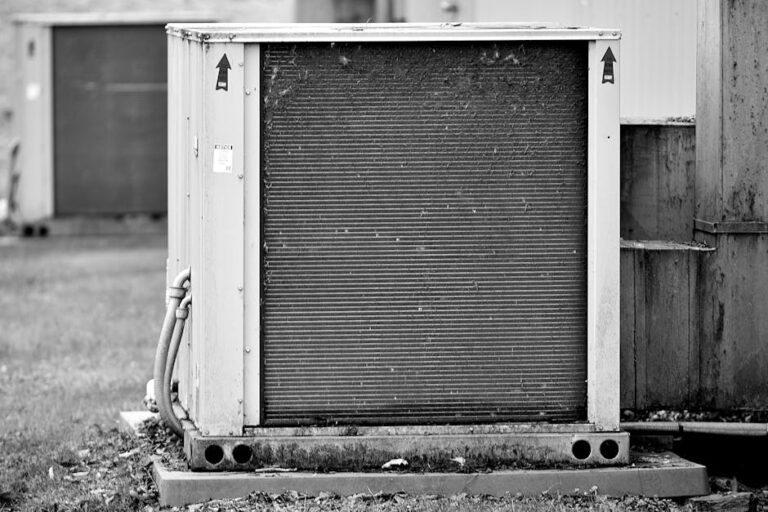
The condenser outside may run almost continuously, shut off and restart frequently, or sound more strained than normal. Low refrigerant affects pressures throughout the system, which can force the compressor to work under unfavorable conditions.
Do not remove panels or attempt to add refrigerant yourself. Refrigerant handling requires the right equipment, training, and procedures. More importantly, adding refrigerant without repairing the leak only treats the symptom. The new charge can escape again, and the underlying issue remains.
What a Professional Refrigerant Leak Diagnosis Includes
A dependable repair starts with more than checking whether the refrigerant level is low. A licensed technician should assess the complete system, including airflow, filter condition, coil cleanliness, drain performance, electrical components, temperatures, and operating pressures.
If a leak is suspected, the technician can use appropriate leak-detection methods to inspect coils, refrigerant lines, fittings, valves, and other likely trouble spots. Once the leak is confirmed, the repair should address the source before the system is evacuated and recharged to the manufacturer’s specifications.
This process matters for residential central AC, ductless mini-splits, heat pumps, and multi-zone commercial VRF equipment alike. The details differ by system, but the principle is the same: identify the cause, repair it correctly, and verify performance after the repair.
Why a Recharge Alone Is Not a Lasting Fix
A recharge may restore cooling temporarily, which can make it seem like the problem is solved. If refrigerant leaked out, however, it can leak out again. Repeated recharges add operating cost, postpone the real repair, and may expose the compressor to unnecessary risk.
The best path depends on the location and severity of the leak, the age and condition of the equipment, the refrigerant type, and the expected cost of repair. A serviceable connection or accessible line repair may be straightforward. A leaking coil in an older unit can require a more careful repair-versus-replacement conversation.
For older equipment using phased-out refrigerants, replacement may sometimes offer better long-term value than a major repair. For newer, efficient systems with many years of useful life remaining, a targeted repair is often the sensible choice. A trustworthy recommendation should explain both options clearly, including comfort, efficiency, warranty, and budget considerations.
Protect Your Comfort Before the Heat Builds
If your AC is losing cooling capacity, icing up, running constantly, or leaving your space humid, do not wait for the hottest week of the season. Koolpro can evaluate the system, explain what the testing shows, and recommend a repair or replacement path built around your home or business needs. Prompt attention gives you the best chance to restore reliable cooling while protecting the equipment that keeps your space comfortable.