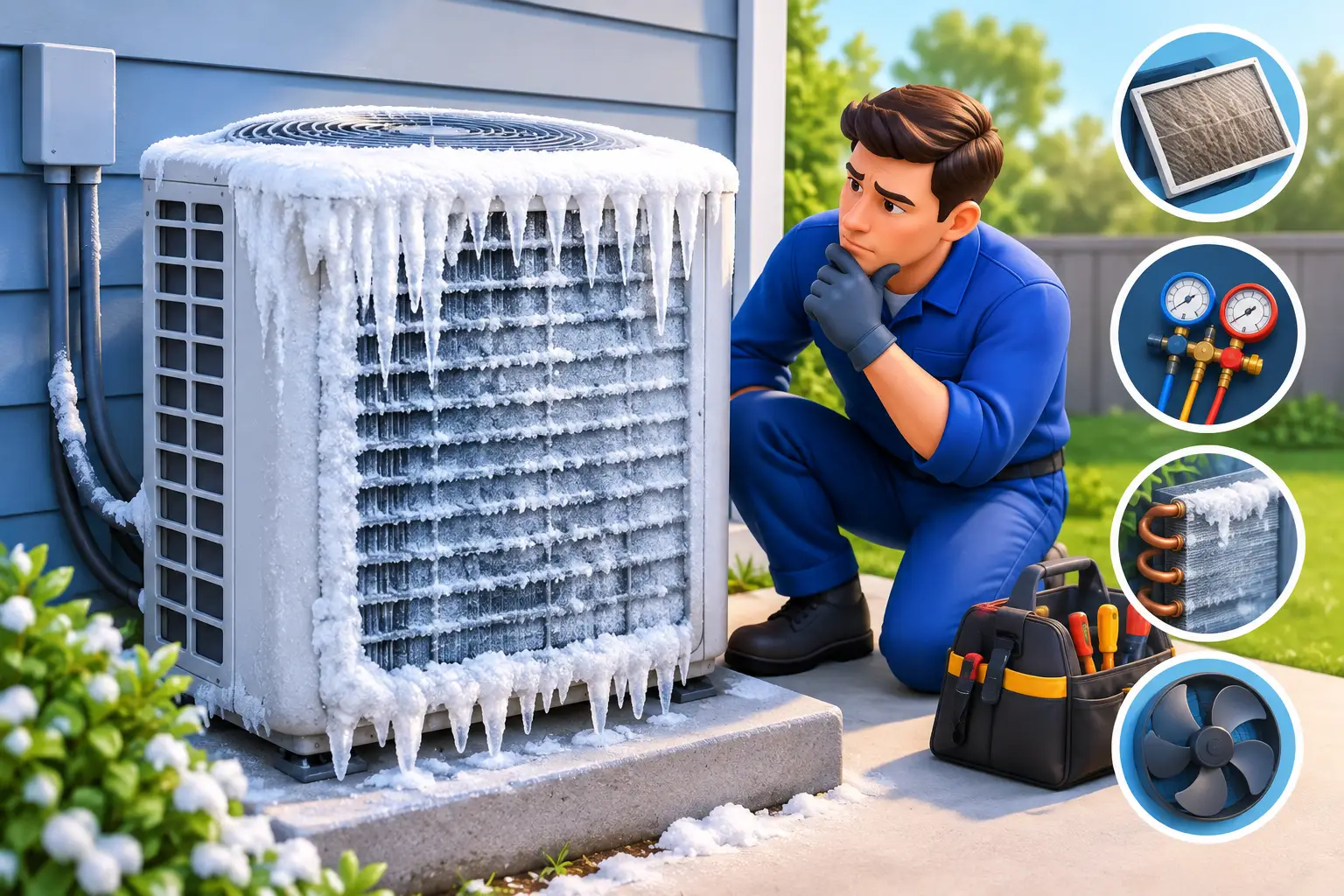
A Houston AC can freeze even when it is working overtime against the heat. If you are asking, “why does AC freeze,” the short answer is that the indoor coil has become too cold and moisture in the air has turned to ice. The more useful answer is that frozen equipment is usually a symptom of an airflow, refrigerant, or drainage problem that needs attention before it becomes a larger repair.
A thin layer of frost on the refrigerant line may be your first warning. In more severe cases, ice can cover the indoor evaporator coil, restrict cooling, cause water damage as it melts, and put unnecessary strain on the compressor. Turning the system down further will not solve it. A frozen AC needs time to thaw and a proper diagnosis of what caused the freeze-up.
Why Does AC Freeze in Houston?
Your air conditioner removes heat from indoor air through the evaporator coil. Refrigerant inside that coil is cold, but it should not normally drop low enough to freeze the moisture moving through the system. For the coil to stay at the right temperature, it needs two things: steady airflow across its surface and the correct refrigerant pressure.
When airflow is restricted, the coil does not receive enough warm indoor air to absorb heat. Its temperature falls below freezing, and humidity in the air turns to ice. Houston’s high humidity can make that ice build up quickly.
Low refrigerant pressure can create a similar result. If the system is undercharged because of a leak, refrigerant expands differently in the evaporator coil and can make the coil excessively cold. Ice then creates an escalating problem: it blocks even more airflow, which allows even more ice to form.
The cause is not always obvious from the thermostat. An AC may still blow some cool air at first, run longer than usual, or stop cooling altogether once the coil is fully iced over.
The Most Common Reasons an AC Freezes
A clogged air filter or blocked airflow
A dirty filter is one of the most common and preventable causes of a frozen evaporator coil. A filter loaded with dust, pet hair, or construction debris limits the amount of return air entering the system. Closed supply vents, blocked return grilles, crushed ductwork, and dirty evaporator coils can produce the same result.
In a home, check whether furniture, rugs, or stored items are blocking return vents. In commercial spaces, airflow problems may come from neglected filters, tenant modifications, dirty coils, or ventilation changes that were never accounted for in the HVAC design.
A blower or ductwork issue
Your indoor blower moves conditioned air through the system. If the blower motor is failing, the wheel is dirty, the capacitor is weak, or a variable-speed blower is not operating at the right setting, airflow can fall below the level the equipment needs.
Duct leaks and poorly sized ductwork also matter. A new high-efficiency system connected to undersized or restricted ducts may cool inconsistently and become vulnerable to freeze-ups. This is why an installation should be designed around the home or building, not just the size of the old unit.
Low refrigerant from a leak
An air conditioner does not use up refrigerant like a car uses fuel. If refrigerant is low, there is usually a leak that must be located and repaired. Simply adding refrigerant may restore cooling temporarily, but it does not correct the underlying problem.
A qualified technician can measure operating pressures, inspect the coil and refrigerant lines, and determine whether the system has a leak or another issue that is affecting performance. Refrigerant work requires proper equipment and licensing, so this is not a do-it-yourself repair.
Dirty coils
The evaporator coil inside the air handler and the outdoor condenser coil both affect system performance. A dirty indoor coil restricts airflow. A dirty outdoor coil makes it harder for the system to release heat. Either condition can contribute to unusual pressures and poor cooling, especially during a long Houston summer.
Coils are easy to overlook because they are not always visible. Seasonal maintenance gives a technician the chance to inspect and clean them before a small buildup affects comfort, energy use, and equipment reliability.
Thermostat settings and mild outdoor weather
Running the AC when outdoor temperatures are unusually cool can sometimes lead to coil freeze-up, particularly on older systems or systems with airflow issues. Setting the thermostat extremely low also keeps the equipment running longer and can expose an existing problem.
This does not mean you should avoid using your AC on a mild day. It means the system should be able to operate safely under normal conditions. If it freezes repeatedly, the equipment needs to be checked rather than managed through thermostat adjustments alone.
A drainage problem or neglected maintenance
A clogged condensate drain does not usually cause ice by itself, but it can appear alongside a frozen coil because both involve excess moisture. When the ice melts, a backed-up drain line can send water into the drain pan, ceiling, or surrounding equipment.
Regular maintenance addresses the connected details that are easy to miss: filters, coil condition, blower performance, drain operation, electrical components, refrigerant readings, and overall airflow.
What to Do When Your AC Freezes
First, turn the cooling mode off at the thermostat. Do not keep running the compressor in an attempt to push through the ice. Continued operation can strain the system and may lead to compressor damage.
If your thermostat allows it and the blower is operating normally, set the fan to ON to circulate room-temperature air and help the coil thaw. Then check the air filter. If it is visibly dirty, replace it with the correct type and size. Make sure return grilles and supply vents are open and unobstructed.
Do not chip ice off the coil, pour hot water into the unit, or use a heat gun. The coil fins and refrigerant tubing are delicate, and damage can turn a service call into a costly repair. Depending on the amount of ice, a full thaw can take several hours.
Once the system is completely thawed, you can restore cooling and watch how it performs. If it freezes again, blows weak air, makes unusual noises, trips a breaker, or leaves water around the indoor unit, schedule professional service. Repeated freeze-ups are not normal, even if changing the filter seems to provide temporary relief.
When a Frozen AC Needs Professional Service
A technician should inspect the system whenever the cause is not clearly a dirty filter or blocked vent. Accurate diagnosis requires more than looking for frost. The service visit may include checking static pressure and airflow, testing the blower, examining the evaporator and condenser coils, clearing the drain, checking electrical components, and measuring refrigerant performance.
For homes with zoning, ductless equipment, or multiple thermostats, the diagnosis can involve zone controls, branch boxes, condensate pumps, or communication components. For commercial buildings and restaurants, a freeze-up may also be tied to outside-air ventilation, kitchen heat loads, refrigeration equipment nearby, or a system that no longer matches the way the space is used.
The right repair depends on the findings. A filter replacement is simple. A leaking coil, failing blower motor, damaged ductwork, or aging system calls for a more considered decision based on repair cost, efficiency, reliability, and the expected life of the equipment. Koolpro can provide clear options so homeowners and facility teams can choose a solution that supports long-term comfort instead of another short-term patch.
Preventing Another AC Freeze-Up
The best prevention is consistent airflow and regular system care. Replace filters on a schedule that fits your household, pets, occupancy, and filter type. Keep indoor vents and returns clear. Avoid stacking landscaping, boxes, or debris around the outdoor unit, and have the system inspected before peak cooling season.
If certain rooms stay warm, humidity remains high, or the system runs constantly, do not assume that is simply the cost of a Houston summer. Those comfort issues may point to duct problems, inadequate dehumidification, incorrect equipment sizing, or a system that would benefit from zoning or a ductless solution.
A frozen AC is frustrating, but it is also useful information. Give the system time to thaw, avoid forcing it to run, and have recurring problems evaluated early. A timely inspection can protect your comfort, reduce unnecessary energy use, and help prevent a minor airflow issue from becoming a major equipment failure.