The first real cold front of the season usually reaches Houston somewhere between mid-October and November. The heat runs for a week, and then a high heating bill shows up that beats anything you paid in August. Sometimes that is simply what a cold week costs. Sometimes it is the system telling you something is set up wrong. The bill pattern tells you which, if you know how to read it.
Quick answer: A high heating bill in Houston is normal after a genuinely cold week, especially on a heat pump that leans on backup strip heat. It is a red flag when the bill jumps in a mild month, when the thermostat shows “aux” or “emergency” heat above about 40 degrees outside, or when your kilowatt-hours rise with no change in weather. The most common cause we see is backup heat that is wired or configured to run too early.
Why heating can cost more than cooling in Houston
It surprises people, because our winter is short and our summer is brutal. The answer is in how the heat gets made.
An air conditioner moves heat out of the house. A heat pump in heating mode runs the same cycle in reverse and moves heat in. Moving heat is efficient. But almost every heat pump in Houston also has electric resistance strips in the air handler, called auxiliary or backup heat. Strips do not move heat. They make it, the way a toaster does, and that is the most expensive way to warm a house.
On a gas furnace the story is different. Heat comes from gas, so the jump lands on the gas bill, and the electric bill should stay fairly flat except for the blower.
So a bill that beats August can be legitimate after a hard freeze. What is not legitimate is the strips running on a 55-degree afternoon.
Normal bill vs. red flag: how to tell
Dollar amounts are the wrong thing to compare. In Texas, most homes buy power from a retail electricity provider, and plans change: a new rate, the end of a promo, a variable plan that moved. Compare kilowatt-hours, the usage line on the bill, month to month and against the same month last year.
| What you see | Probably normal | Red flag |
|---|---|---|
| Month with the first real cold snap | Noticeable jump in kWh (heat pump) or therms (gas) | Jump far beyond the same month last year with similar weather |
| Mild month, highs in the 60s and 70s | Usage close to spring levels | Usage close to a cold month |
| Thermostat display | “Aux” appears briefly on cold mornings or after a big setback | “Aux” or “Em heat” showing on mild days, or for hours |
| Run time | Long cycles on cold nights | Runs constantly on a mild day and never quite reaches the setpoint |
| Gas furnace home | Gas bill rises, electric stays flat | Electric bill rises sharply too |
| Change with no reason | Gradual creep over years | A sudden step with no change in weather or habits |
A neighbor’s bill is a weak comparison on its own, because thermostat habits vary a lot. Your own history is the better benchmark.
The aux heat problem, in plain English
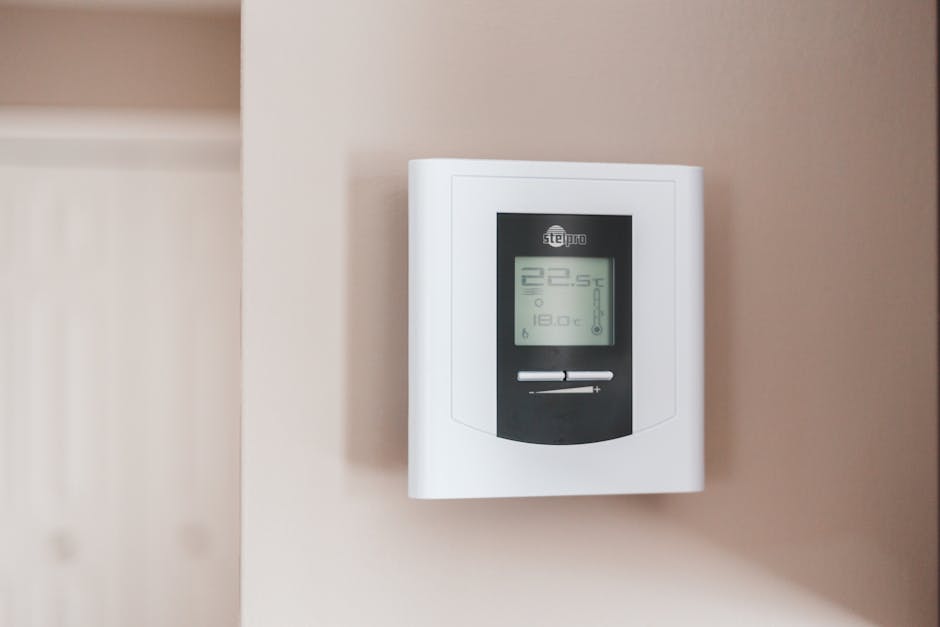
When a heat pump is set up correctly, the strips are a backup. They help on the coldest mornings, during defrost, and when the house has to recover several degrees quickly. The rest of the time the heat pump does the work alone.
When it is set up wrong, the strips become the main heat source. These are the setups we find most often:
- A thermostat swapped without the right configuration. A new smart thermostat installed on a heat pump but set up as if it were a conventional system, or with aux heat wired to a terminal that calls for it with every heating cycle.
- No outdoor lockout. Many systems can be told not to use strips above a set outdoor temperature. Left at defaults, or not set at all, the strips fire whenever the house falls a couple of degrees behind.
- Emergency heat left on. Someone switched to “Em heat” during a freeze, when it seemed like the safe choice, and never switched back. The system then runs on strips alone all season.
- Aggressive setbacks. Dropping the thermostat to 60 at night and back to 72 at 6 a.m. asks for a big, fast recovery, and many thermostats call the strips to do it. On a heat pump, smaller setbacks usually cost less. We cover that and other habits in HVAC energy saving myths.
- A heat pump that cannot carry the load. Low refrigerant, a dirty coil or a failing part leaves the heat pump weak, so the strips cover the gap. That is a repair, not a setting.
If your heat pump is blowing cool air or not heating at all, that is a different problem with its own checklist. Our guide to a heat pump not heating in Houston walks through it step by step.
What a leak looks like on a winter bill
A customer of ours out in Fayetteville called about a leak in her heat pump. A year later she called again with the same leak, and asked for the same technician who had worked on it the first time.
That case is worth telling for two reasons. First, a heat pump that is slowly losing refrigerant rarely announces it in winter with a breakdown. It just heats a little worse each week, runs longer, and calls the strips more often. The first symptom is often the bill, not the comfort. Second, a leak that comes back after a year is the reason we are wary of “just top it off.” Adding refrigerant without finding and fixing the leak buys a season at best, and you pay for the strips the whole time.
Three checks you can do yourself
- Look at the filter. After a summer of round-the-clock cooling, a filter that was not changed since spring is loaded. Restricted airflow makes a heat pump run hotter and longer. Change it and watch the next two weeks. If you are unsure what to buy, see what MERV rating Houston homes need. A thicker filter is not always better.
- Watch the thermostat on a mild day. If you see “aux” or “Em heat” at 50 or 55 degrees outside, write down the time and the outdoor temperature. That note tells a technician where to look in minutes.
- Check the mode. Make sure the system is on “Heat,” not “Emergency heat.” It sounds obvious. It is also free.
When not to spend money
A high heating bill after a hard freeze is not a reason to replace a heat pump. It is also not a reason to buy a new thermostat, dual fuel conversion or anything else on the spot. One bad month is data, not a diagnosis.
What makes sense is cheap first: filter, mode, a look at the thermostat. If the numbers still do not add up, a tune-up that actually measures refrigerant charge, airflow, strip heat amperage and the thermostat configuration will find it. Our fall tune-up checklist lists what that visit covers, and our seasonal maintenance keeps it on the calendar before the first front, not after the bill.
Configuration is a real skill, and it is not always the cheapest installer who gets it right. Mitsubishi once referred a homeowner to us because the builder’s installer on a 2024 remodel could not get the system configured. Good equipment set up wrong still performs, and bills, like bad equipment.
Frequently asked questions
Why is my heating bill higher than my summer bill?
On a heat pump, cold weather brings in backup electric strip heat, which costs much more to run than the heat pump itself. A few cold days of strip heat can push a bill past August. If it happens in mild weather, the strips are likely running when they should not.
What does aux heat mean on my thermostat?
It means the backup electric heat strips are on. That is normal on cold mornings, during defrost or after a big thermostat setback. Seeing it for long periods on mild days usually points to a configuration or refrigerant problem.
Should I use emergency heat when it gets cold in Houston?
Generally no. Emergency heat turns off the heat pump and runs strips only, which is the most expensive way to heat. It is meant for when the heat pump has failed. If you switched to it during a freeze, switch back to regular heat.
How do I compare heating bills fairly?
Compare kilowatt-hours, not dollars, and compare against the same month last year. Rate plans change, so dollar amounts can move even when your usage did not.
Bring the numbers
If your heating bill does not match your winter, tell us what you are seeing or call 713-714-0707. Bring the kWh from the last two or three bills and any note on when the thermostat showed aux heat. We serve Houston, Katy, Sugar Land and Fort Bend.